Pumping iron: Give it a try!

Walking is a terrific form of exercise, but as I note here, any walking program should be complemented by other forms of exercise, including strength training.

The CDC recommends that adults ages 18 to 64 do muscle-strengthening activities on two or more days a week. (That’s in addition to its advice to do at least 2 hours and 30 minutes of moderate-intensity aerobic exercise every week.)

strong-310874However, the CDC has found in a new study that only 23.7 percent of us ages 45 or older meet that recommendation. Further, that group is most likely to include women, widows, people 85 or older, people who are obese, Hispanics, and those who didn’t graduate from high school.

I am a 45-year-old woman, and I have to confess that in the past, most weeks I would barely meet that two-day minimum, unless I was taking a class at my gym. I think I tended to feel that strength-training didn’t provide as intense or get-my-blood-pumping a workout, and if I were going to work out, I wanted to feel like I did, sweat rivulets as proof.

But over the past few months I’ve managed to work strength training into my routine more often, and circuit training is the means. Due to a change in my work schedule, my workout time on weekdays became more constrained — 30 minutes, firm.

Some days I do aerobic activity, sure. But on others, I do an interval workout. After warming up for a few minutes, I do one minute of activity, take 20 seconds to change moves, then do another minute of activity, and so on, for 11 or 12 sets, ending with a couple minutes of cool-down.

During those one-minute intervals, I do various strength-training moves. I use dumbbells, machines at my gym and my body weight. Ideally I’ll do combo moves, such as squats standing to a shoulder press, to work both arms and legs. Every few intervals, I throw in a minute of cardio, such as jumping rope or running the stairs at the gym.

To my surprise, this does make me feel like I got a good workout. Knowing that I have just 30 minutes makes me focus and do my best to get the most out of it.

And I can feel assured that I’ll reap the benefits of strength training — among them, higher metabolism, (hopefully) more toned body parts and an improved ability to easily do activities of daily living.

So pick up a dumbbell and give it a try, or use your body weight to do exercises in any setting you like. Your body will thank you!

What about hand weights?

After reading my last entry, Should you wear ankle weights?, several people asked me, “What about wrist or hand weights?”

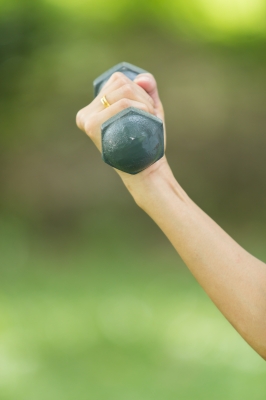
Limit weights to non-walking workouts. Photo credit: Tiverylucky/FreeDigitalPhotos.net

Limit weights to non-walking workouts. Photo credit: Tiverylucky/FreeDigitalPhotos.net

I’m happy to address that topic.

Generally, my answer is the same: I would not recommend it. And generally, the reasons are the same.

First, I think it’s best to focus on walking while one is walking — and with the proper form and intensity, walking can be a terrific workout all on its own. (Want to learn how? Contact me.)

Also, carrying equipment while walking can increase the chances for injury. It can put unnecessary stress on the joints and muscles of the arms.

Plus, you don’t get much bang for the buck when carrying weights. Doing so increases your heart rate and calorie burn by only a small amount. You can get a good boost instead by employing techniques that can increase the intensity of your workout, such as doing intervals or increasing your overall speed.

In other words, the possible small benefit is countered by the larger risk for injury.

Should you wear ankle weights?

Several people have asked me whether they should wear ankle weights when walking, in part to gain some extra calorie burn and/or to boost the workout aspect.

The short answer is no — you should not wear ankle weights while walking.

be

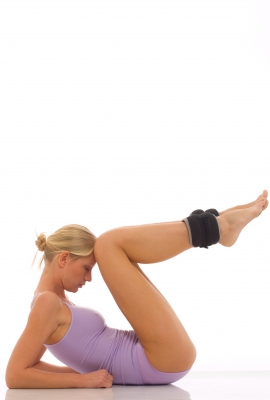
Want to use ankle weights  while working out? Limit it      to something like this: while doing stationary strength training. Photo credit: Ambro/FreeDigitalPhotos.net

Here is the long answer:

  • Strapping weights around your ankles tightly enough so they don’t jostle while you move causes compression, which could compromise blood flow to your feet — not advisable.
  • Ankle weights are an unnatural distribution of extra weight. To concentrate added weight in one spot, particularly around a joint, can cause undue exertion and injury.
  • Wearing ankle weights can throw off your gait. That can tax your joints — not only your ankles but also your knees and your hips, causing strain and injury.
  • Having something strapped around your ankles may pose a tripping hazard. As you walk, you might get tangled up in the extra bulk. Or you might subconsciously widen your legs to keep the weights from bumping or rubbing together, which brings us back to the previous bullet point.
  • Concentrating weight at your ankles — even if only a few pounds — creates a muscle imbalance. Your quadriceps (or the muscles on the front of your thighs) suddenly have more work to do, because that is the muscle that lifts your leg to bend your knee. But your hamstrings (the muscles on the back of your thighs) don’t have an equal extra job.

If you want to boost the effects of your walk by wearing ankle weights, I’d suggest you reconsider. Keep weight training to just that — a weight training session. And keep your cardio efforts to an aerobic exercise session. You’ll get better results in both situations. (However, something like a circuit class, in which you alternate cardio bouts with strength training moves, is designed to be safely effective.)

All that said, if you are looking to turn your walk into a more serious, results-bearing workout, let’s talk. I can help you do so, without extra equipment and with lower chances of injury.


Today’s walk

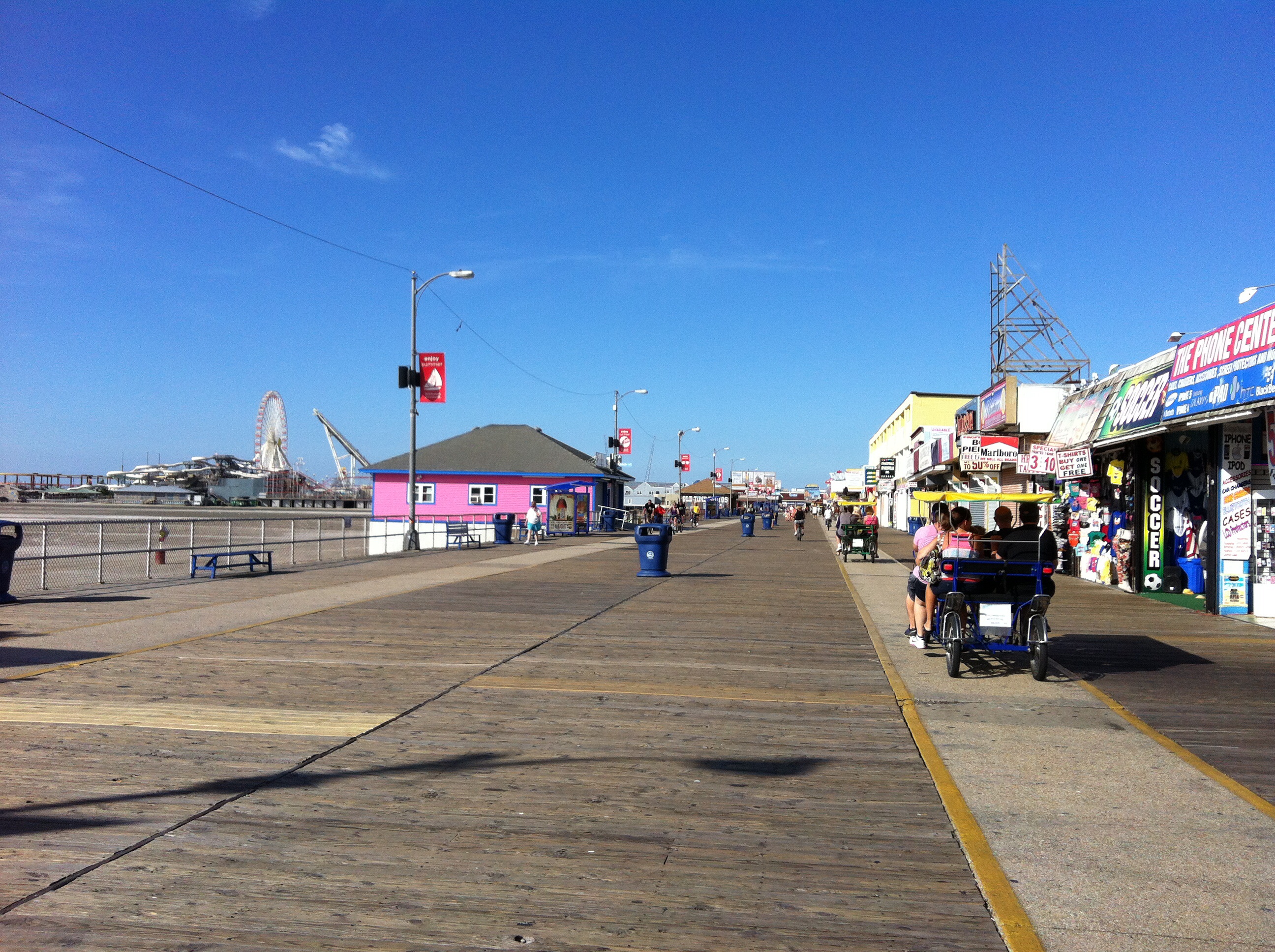
This morning I did a combo walk — a couple miles on the beach and a couple on the boardwalk/sidewalk. Walking on sand helps challenge your stability. Bonus: I saw dolphins leaping in the waves. Great start to the day!

Friday morning on the boards

Friday morning on the boards

Save $10!

Register for the Delaware & Lehigh Heritage Half Marathon by Sunday (Aug. 31) before the fee goes up by $10.

This half marathon, to be held on Sunday, Nov. 2 in the Lehigh Valley of Pennsylvania, is an ideal race for walkers — and in fact is focusing on walking participants. The time limit is 4.5 hours, which is very generous and takes a lot of stress out of the event for first-timers. That time limit translates to a 20-minute-mile pace. (Info on course under picture…)

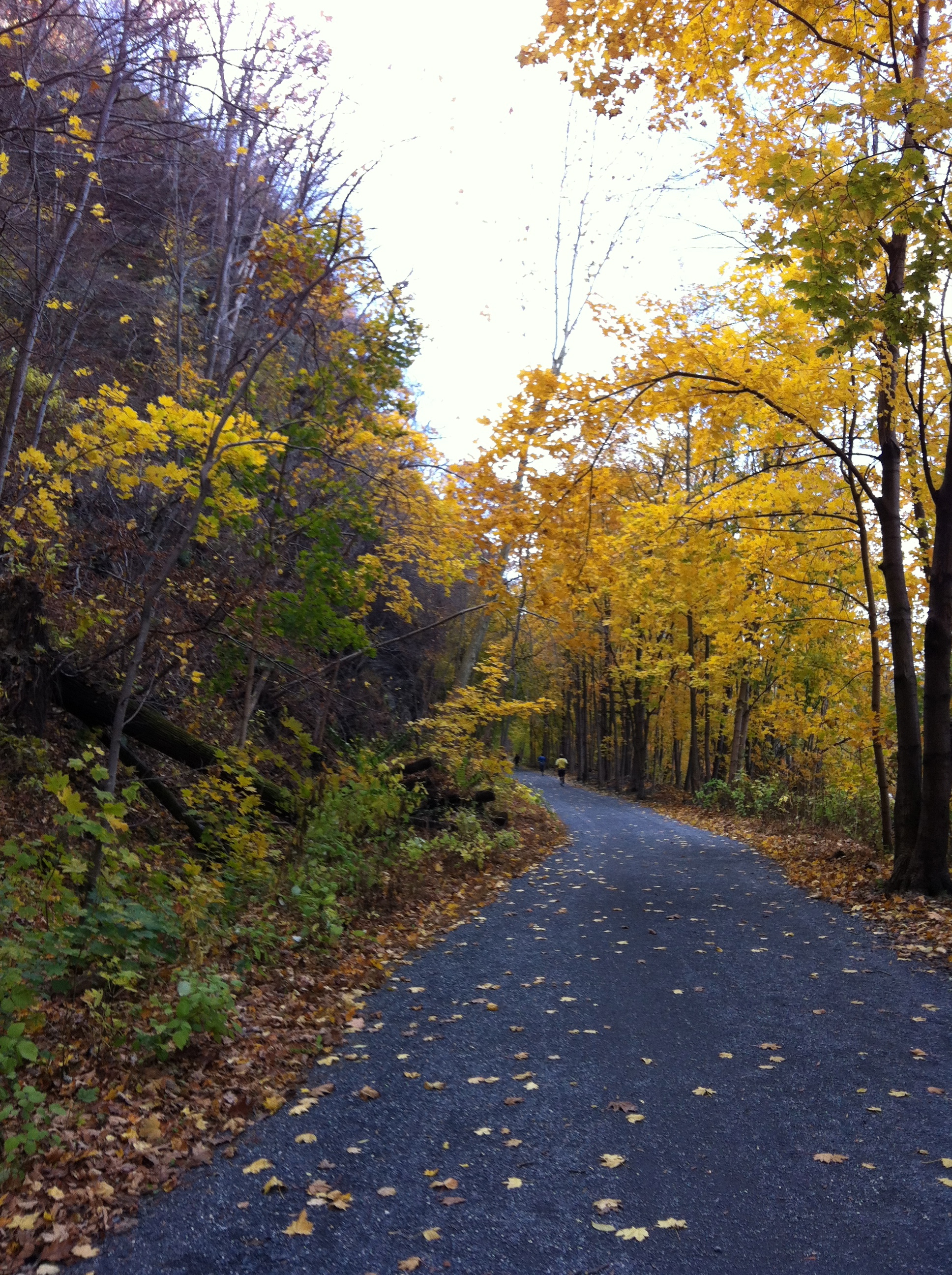
Along the course of the Delaware & Lehigh Heritage Half Marathon, 2013

Along the course of the Delaware & Lehigh Heritage Half Marathon, 2013

The course is beautiful and flat — the first couple of miles are in the town of Northampton, Pa., and the rest is all along the Lehigh River, surrounded by colorful fall foliage.

Just like there are usually pace runners in most half and full marathons, this race will have pace walkers to help the walking participants keep a steady stride. In fact, I will be one of the pacers!

Check out the registration info here and consider joining in the walking fun. Space is limited, so don’t delay in signing up. I hope to see you there!

Thinking caps and walking shoes

New research has found that walking boosts your creativity — 81 percent of people studied were more creative when walking than sitting.

“Walking opens up the free flow of ideas,” the researchers state, “and it is a simple and robust solution to the goals of increasing creativity and increasing physical activity.”

Researchers at Stanford University tested subjects on creative thinking while the subjects were walking and seated as well as after they walked. Scores were higher for the walkers than the sitters, but the post-walkers also showed improved scores, what the researchers called a residual effect. The research was published in the Journal of Experimental Psychology: Learning, Memory, and Cognition.

So: Feeling stumped? Trying to determine how to proceed on a project, a task, a plan? Take a walk, and the light bulb over your head might just illuminate.

An 86th birthday half marathon

I promised in one of my earliest posts to tell the story about how my active grandmother (Gram) joined me on a race course. I’m happy to share one of my best memories.

What I didn’t mention was that the race — a half marathon — was on her 86th birthday. Not that I had any doubt she could do it.
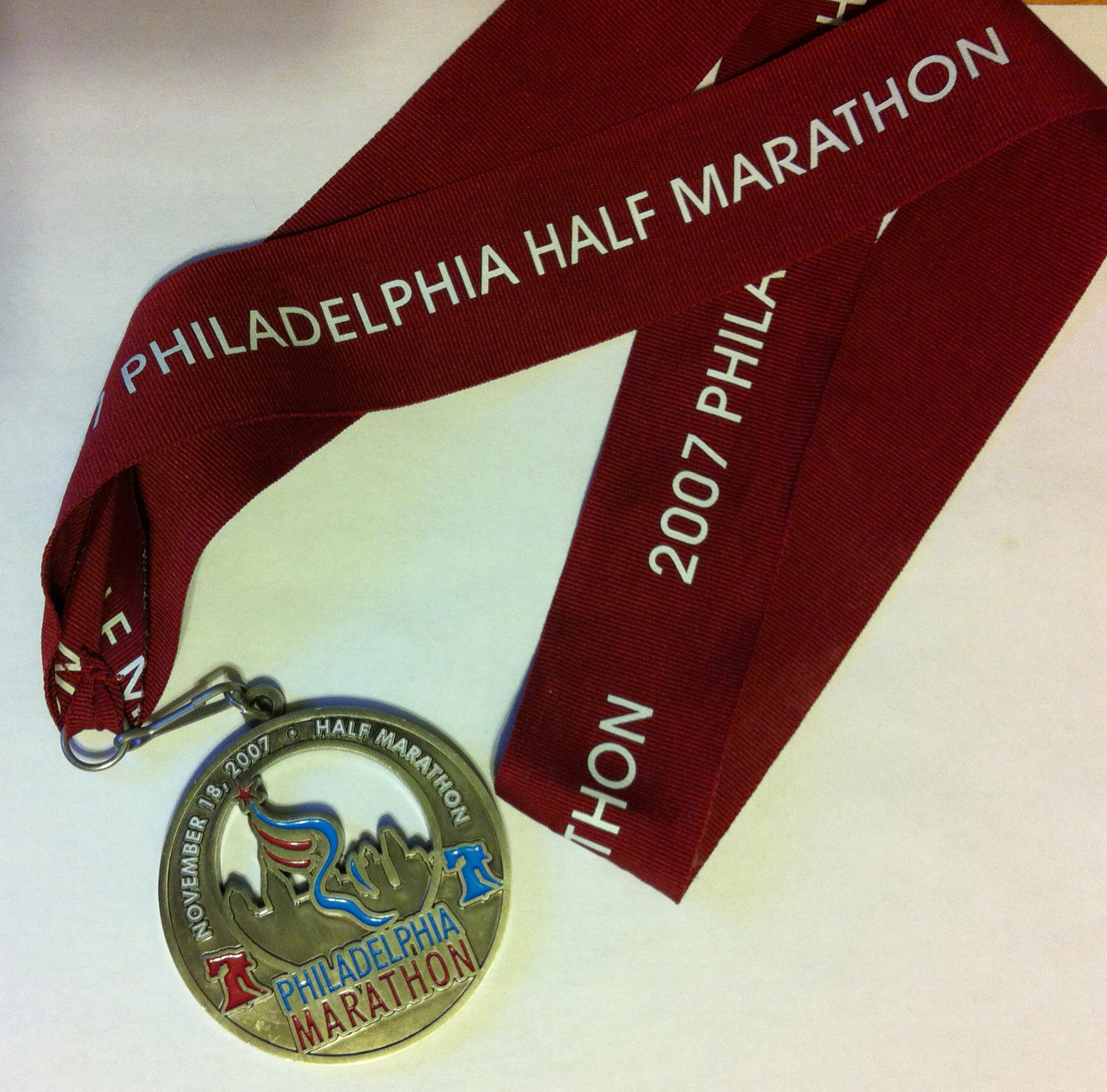
Race bling!

Race bling!

The 2007 Philadelphia Marathon was on the list of events for a team I helped coach and coordinate. When I noticed that the race date happened to be Gram’s birthday, I knew I had to see if she might want to add a half marathon to her list of physical accomplishments. (You may recall from my earlier post that she took up skiing in her 50s, helped found a hiking club in her 60s and biked — more than once — across New Jersey.) Plus, because she had essentially inspired me to hit the race course in the first place, I loved the prospect of doing a race with her.

At that point, I’d completed three full marathons but no half marathons, and she was familiar with my participation. And I’d joined her on ski slopes and hiking and biking trails many times over the years. So I called her.

“Gram, there’s a half marathon in Philadelphia on your birthday. Do you think you’d like to do it together?”

“How far is a half marathon?” she asked.

“Thirteen-point-one miles,” I replied.

“Okay,” she agreed.

“Great!” I said. “When it comes time to start training officially, I’ll give you the details.”

“Oh,” she said, “I don’t think I need to train. I go hiking every week!”

Well … okay then!

But she was right. Her regular hiking prepared her just fine. (I wouldn’t recommend this for all beginners, but if you’ve met Gram, you know it was going to be okay.)

The race was on a Sunday. On Saturday evening, our team held a pasta dinner and gathering. I couldn’t have been more pleased to see my wishes about Gram come to fruition.

You see, our family would always tell Gram how terrific it was that she was so active; that she hiked regularly in her 80s; that she still liked to get out on her bike. But she would always respond dismissively, as if it were no big thing. She’s always been modest that way. I wanted her to hear the same accolades from strangers, believing it might give her more of an idea of how awesome and impressive she is.

When my coworkers eagerly approached us to meet her, and when so many other members of the team expressed their admiration to her, I think some of it did make an impression. By the end of the evening, she was reveling in her celebrated status. I was overjoyed.

Soon race morning dawned. We rose early, dressed in layers for the chilly race, and lined up with thousands of others near the Philadelphia Museum of Art. She soon expressed her amused annoyance with repeated photo taking by my husband. When the “Rocky” theme music begin to blare from the PA — the race starts in front of the famous stairs Rocky ran up, after all — we were off!

Our pace was slow and steady, and in 3 or 4 miles we were with a small group of walkers who were shifted to the sidewalks as the streets were reopened to traffic. We went through Center City, past Independence Hall, near the Philadelphia Zoo and Drexel University. It drizzled on us, but Gram kept stating that she was fine in her wool sweater — tried and true on many a winter hike. She even gave me her gloves at one point!

As we were in the final mile, we saw some women coming toward us. Among our team was a group of sisters, each of whom wore a different large dressy hat. A few of the sisters had finished the race already and were backtracking to find their other sisters. When they spotted Gram, they expressed delight in seeing her on the course. Gram stopped in her tracks to gab with them. I had to gently urge her to keep going. “We’re almost at the finish!” I encouraged.

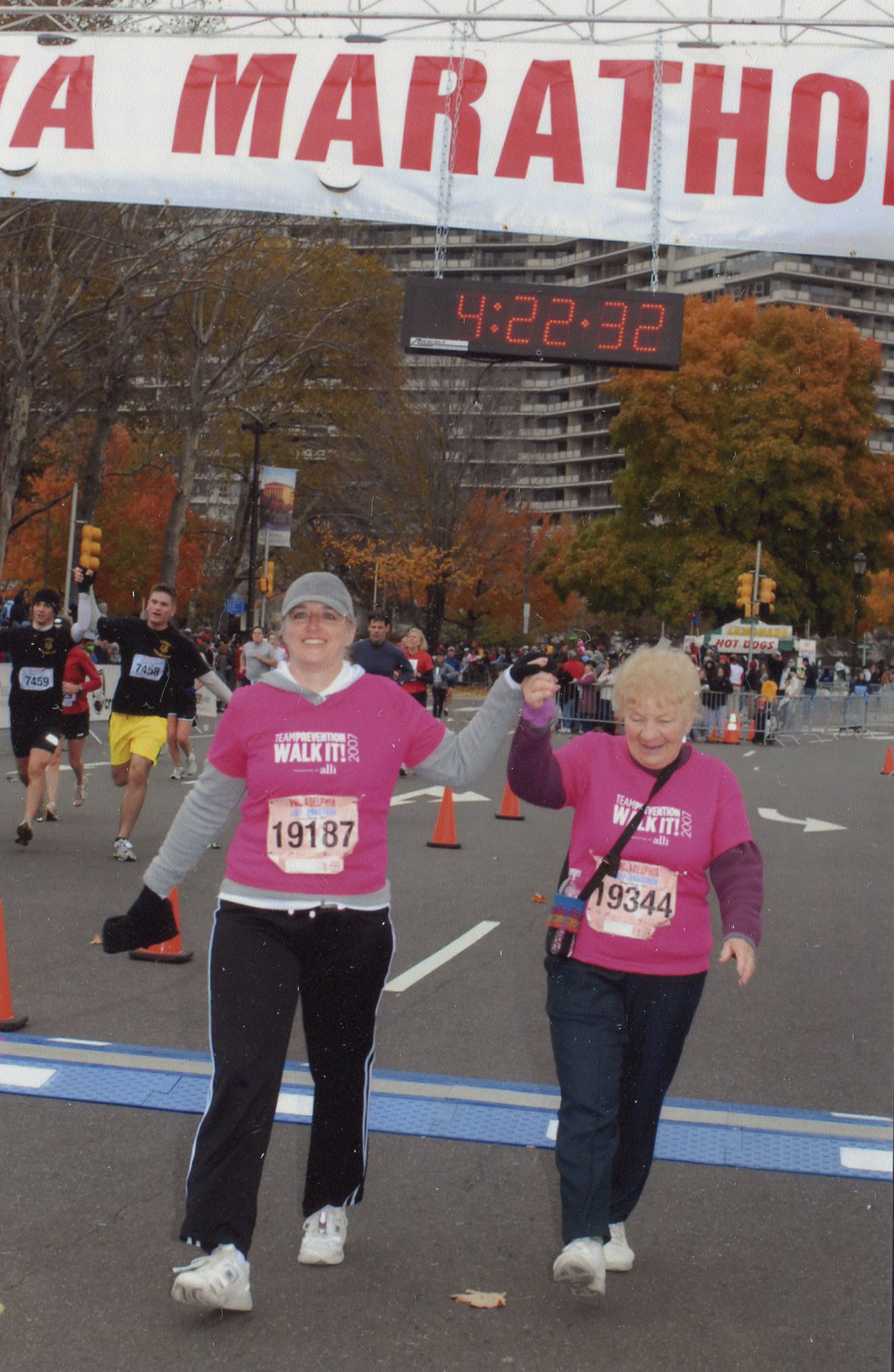
My husband waited just before mile 13 to get our photo, and my dad (Gram’s son) and stepmother found a spot right near the finish line to watch for us. We rounded Eakins Oval, saw the end approaching, grabbed hands and crossed the finish line, as her name was broadcast by the announcer.

We did it!

We did it!

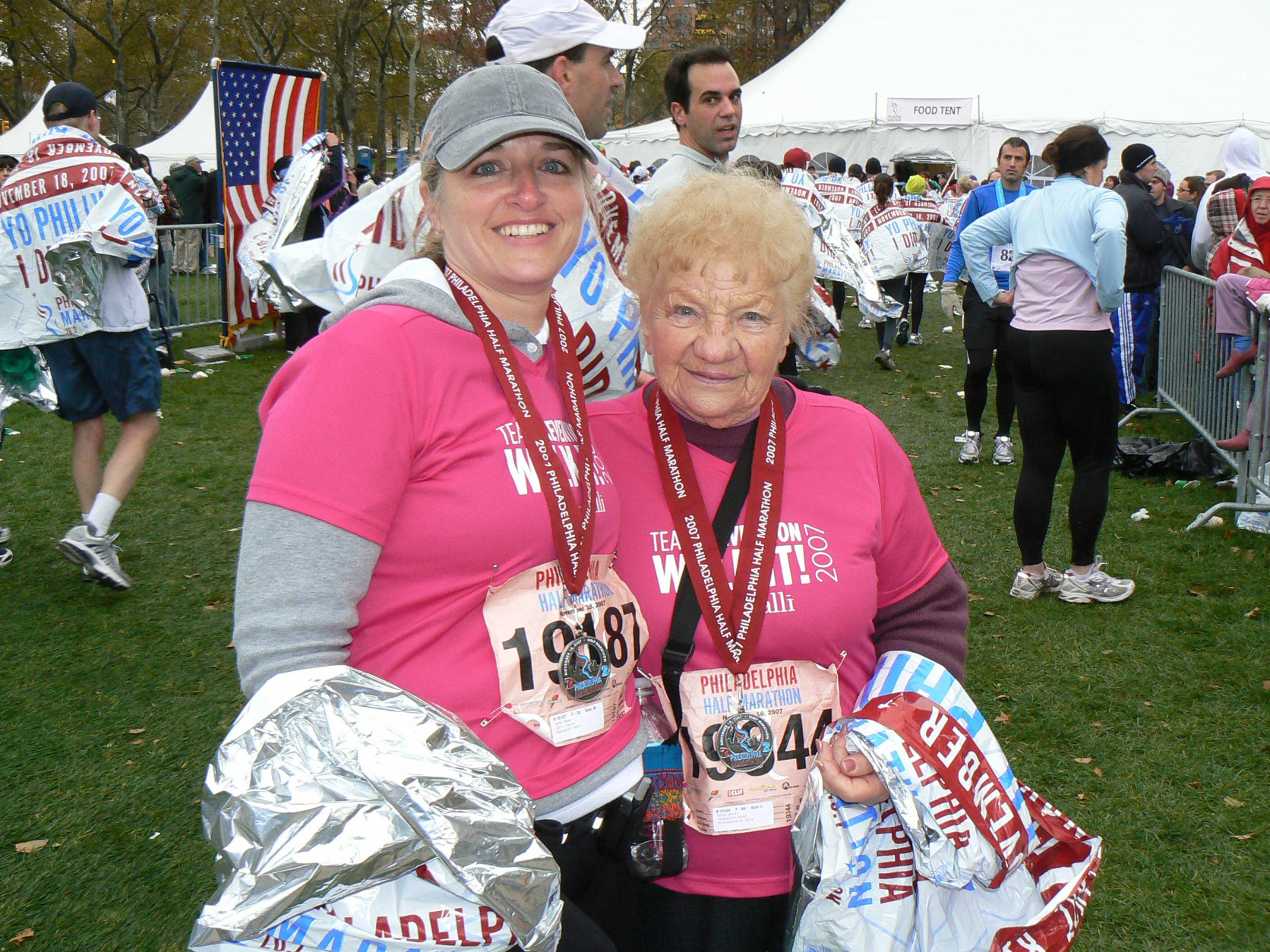
We happily accepted our medals, wrapped ourselves in space blankets, and started to celebrate. Our family eagerly sought us out in the finisher area to offer hugs and congratulations. My dad announced that he was treating us to lunch, and we happily chowed on cheeseburgers as Gram talked about how she couldn’t wait to get in her jacuzzi tub at home.
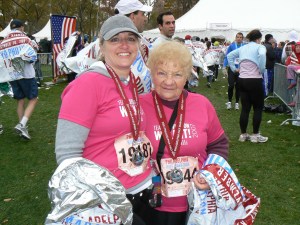
Proud finishers.

Proud finishers.

Several weeks after the race, Gram called. In the mail she’d received a wooden plaque with a photo of us crossing the finish line and commemorating her third-place finish in her age group. (Which I dispute, by the way. Upon checking the race results, I noticed that the first and second-place finishers were listed as age 99, so I suspect they were people who didn’t input an age and that was a default.)

“Did you get one of these in the mail?” she asked.

“No, Gram — I didn’t exactly finish third in my age group,” I said, smiling. But that was okay. I wasn’t in the race for a PR.

Seven years later, she’s approaching 93 and most recently joined a croquet league. The half marathon plaque still hangs in a place of honor in her home. And the memory of sharing the experience with her holds a place of honor in my heart.
Walking and water slides

Water slides? Huh? I’ll get to that in a minute…

Saturday morning walk

Saturday morning walk

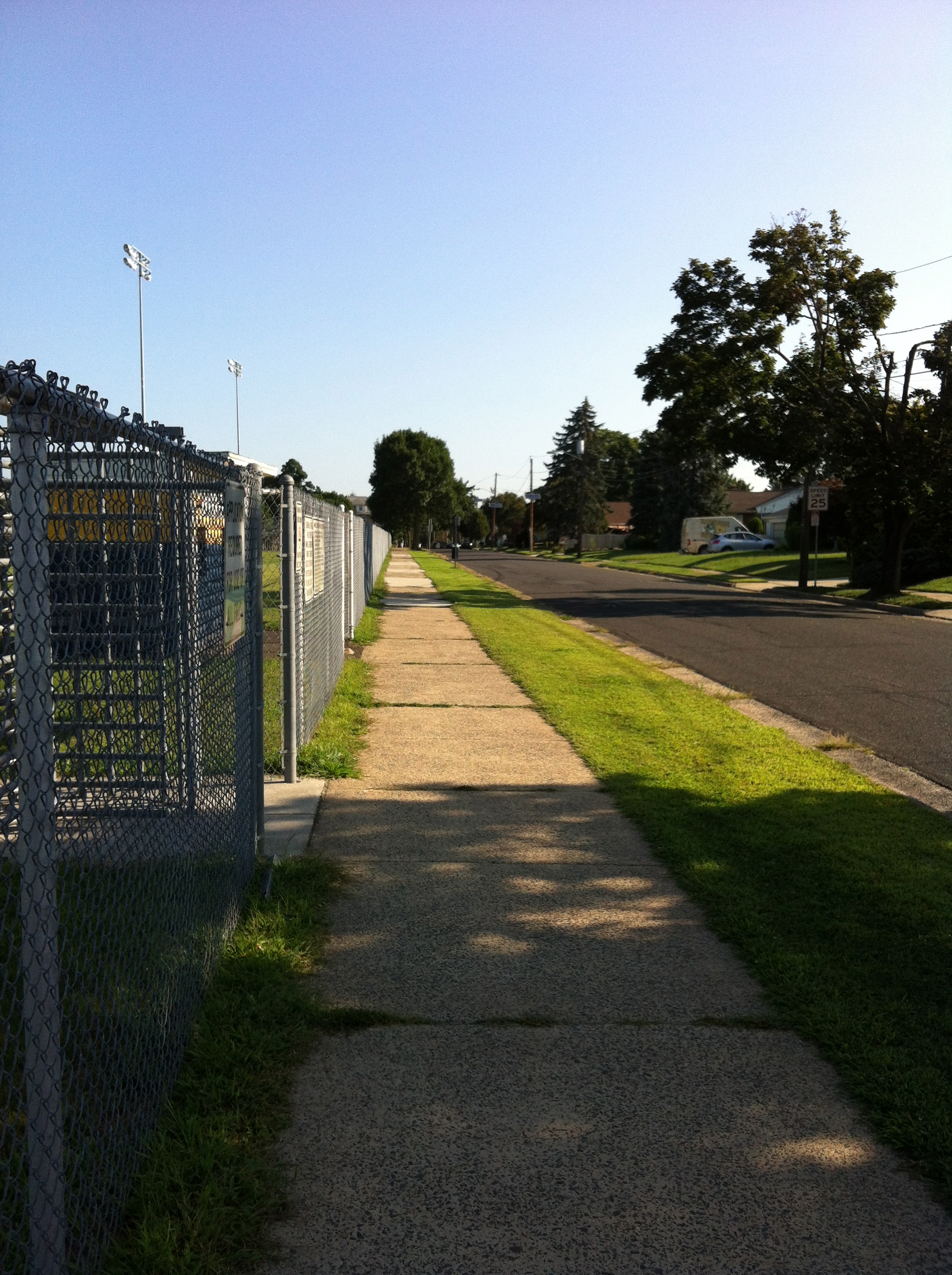
Today I did a 3.25-mile walk around my town. I’m lucky to live in a place where there are plenty of side streets and sidewalks so I can walk safely just by exiting my front door. I can’t imagine living on a road with no shoulders or sidewalks and having to drive somewhere so I can go for a walk.

I’ve trained for many half marathons by doing walks just within my somewhat small town. I’ve been able to map out routes of 1 mile, 3 miles, even 6 and 8 miles. There are many apps and tools that can help you plan out your walks — stay tuned for info in a future post.

In the meantime … about the water slides. On my walk today, I noticed a mother and little girl in their yard. The yard was nearly fully occupied by one of those inflatable playthings. This one had a great curving slide that landed in a big circular pool, and they were in the process of filling it up with a hose.

“That looks fun!” I said, smiling. That prompted the little girl to announce that it was for her birthday party. I stopped and asked how old she was. “Five,” she said, holding up her hand with fingers splayed to demonstrate. “Do you want to come to my party?” she asked very politely.

With regrets, I declined — but I have a feeling I’ll be thinking all day about how fun it would be to go down that water slide.


Walking and Alzheimer’s disease

New research is examining the link between an older person’s walking speed and his or her risk of developing Alzheimer’s disease.

In a study published in the journal Neurology, researchers reviewed data on almost 27,000 people from 17 countries who were at least 60 years old and did not have dementia.

The researchers used simple methods to measure walking speed and cognitive abilities,  and they followed a portion of the study group for 12 years to see how many developed dementia. The researchers discovered that people who had motoric cognitive risk syndrome, which is characterized by slowing walking speeds and cognitive lapses, were more than twice as likely to develop dementia (of which Alzheimer’s is one type) over that 12-year period. “Slowing walking speeds” was defined as slower than 2.2 miles per hour.

It’s important to note that decreased walking speed alone is not a sign of impending Alzheimer’s — the combination with cognitive problems is important.

One more reason to get into the habit now of walking as a workout.

In fact, another new study suggests that, along with several other lifestyle measures, regular exercise might help reduce your odds of developing Alzheimer’s.

Done safely and with good form, exercise can help you prevent a host of health problems. And walking is one of the easiest forms of exercise there is.

Have ice cream!

Today is the final day of National Ice Cream Month! Be sure to celebrate — I know I’ve done my share the past few weeks.

Once you’ve enjoyed your favorite flavor, head out for a walk to balance the scales. On average, walking burns 300 calories an hour. By “on average,” I mean if you weigh about 155 and walk 3.5 mph. Find more body weights and speeds here.

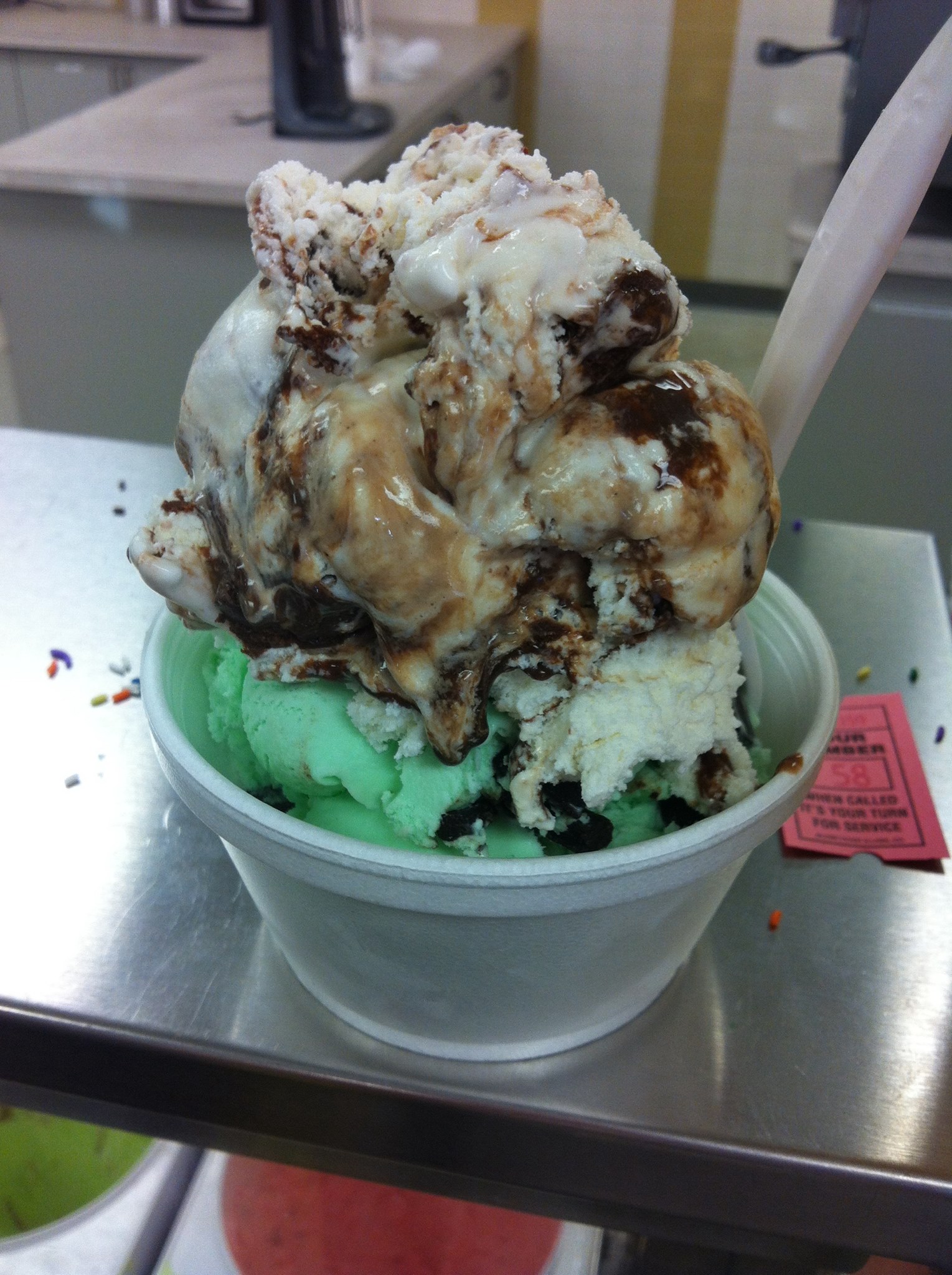
I know that what’s pictured below is more than 300 calories worth of ice cream. But I savored it after 5 hours of bike riding, so I think I mostly came out even. 🙂

Mmmmm ... ice cream!

Mmmmm … ice cream!