Unknown's avatar

About Walk With Joelle

Walking coach and ACE-certified group fitness instructor

Walking for a cause

I’ve mentioned before that I’ve done full marathons (four) and half marathons (12) as a walker. I’ve never done a 5K — until now.

A very worthy reason presented itself and that’s what prompted my registration. One of my oldest and dearest friends is battling lupus, for which there currently is no cure. I am joining her in a 5K walk with the Alliance for Lupus Research, from which 100 percent of the proceeds will go toward research into a cure for this debilitating illness. The event is Oct. 18, just two weeks away.

I want to see my dear friend (and others with this diagnosis) feel less pain and less restriction on her quality of life; I want her to regain her good health. Lupus is an autoimmune disease that causes inflammation of and damage to the joints and other parts of the body, including organs. Learn more here.

Won’t you consider a donation, even a small one? It’s tax deductible and you’ll be helping fund research into a cure. You can find my fundraising page here.

Thank you so much!

Introducing … Lucy

Forgive me for being a tease in my last post — I made mention of Lucy the Elephant several times but didn’t include her picture. For those who have not had the pleasure of visiting her, and to satisfy Walk With Joelle reader requests, here she is! You can actually go inside the structure and learn all about how she came to be.

IMG_1672

269 miles, give or take

IMG_1620 My last post was about cross-training, and this one is too — but a whole different kind.

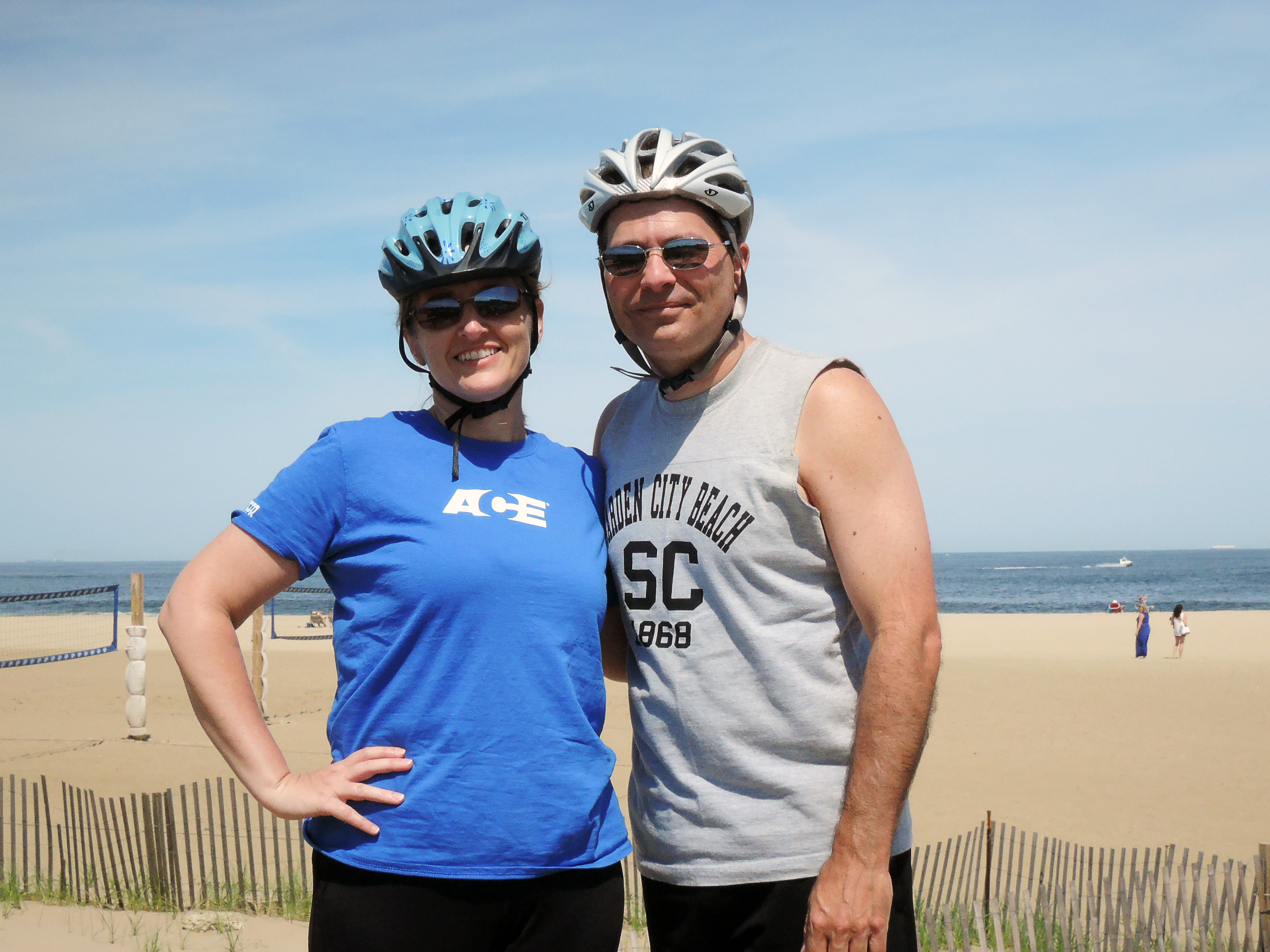
Early this summer, on one of the first really nice weekends, my husband and I decided to take our bikes to the Jersey Shore and go for a ride. It wouldn’t be the first time we’d wind our way through its oceanfront towns on a two-wheeler. On this particular day, we rode round-trip from Sea Bright to Asbury Park, about 21 miles all told.

It felt so great to be active and outdoors, soaking in the sunshine! And what a range of towns and types of neighborhoods we went through. From palatial homes on acres of land to taffy-colored cottages to the gritty yet hip feel of Asbury Park, the Shore varies greatly.
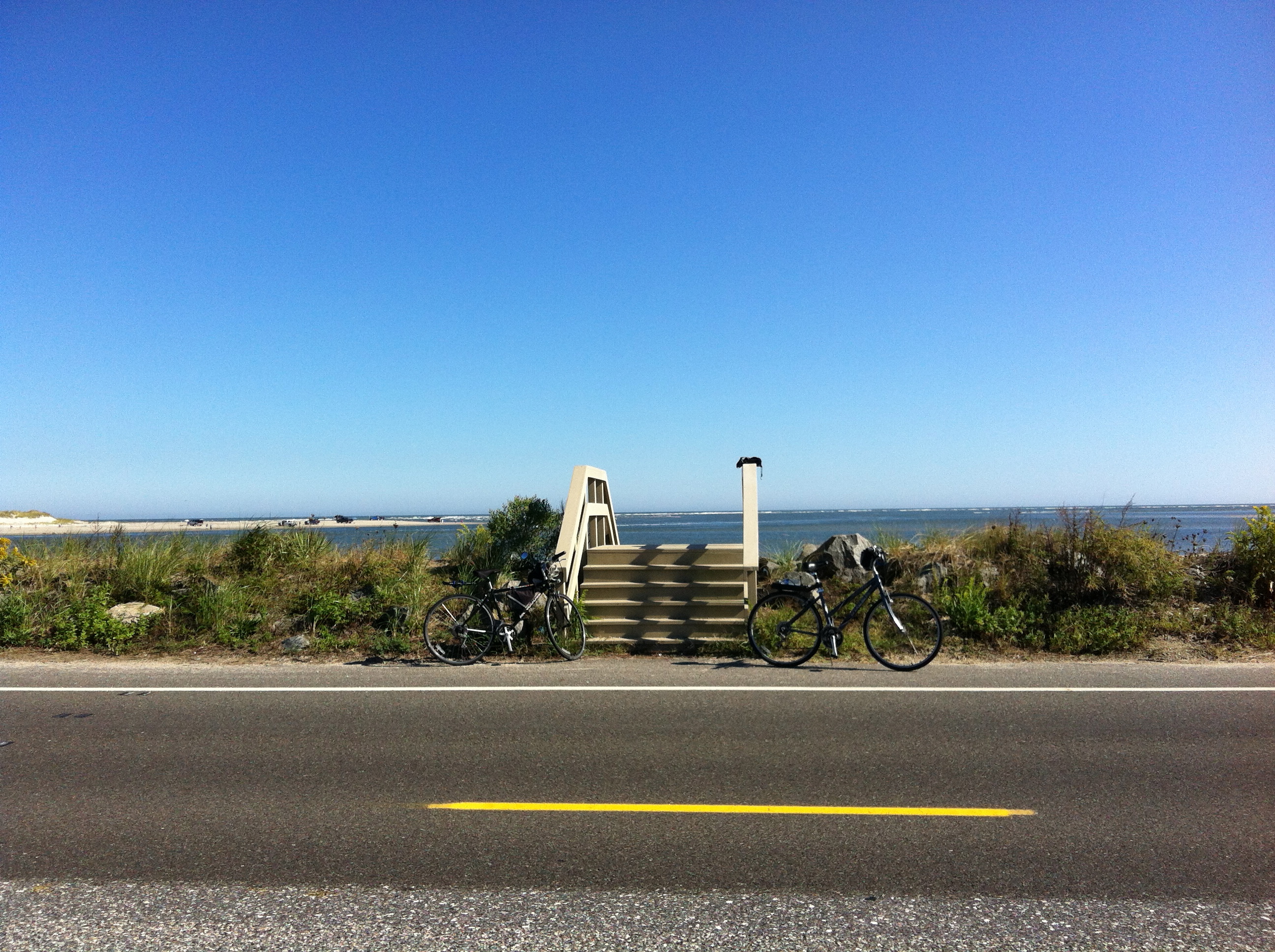
Midway through our first ride, on June 1

Midway through our first ride, on June 1

The following weekend, we said, “Let’s do that again!” This time, though, we went round-trip from Asbury Park to Point Pleasant (about 22 miles). Midway, we stopped for lunch at an outdoor eatery, watching boats come and go through the inlet, and just reveled in being outside after what was such a horrible winter.

On the way home, we had a thought: We should try and bike the entire Jersey Shore over the course of the summer. After all, we’d already done two sections. And fitness goals are best broken down into more manageable pieces.

So that became our summer activity goal. We couldn’t wait to spend so much time being active outdoors — and even better, at the Shore.

The following week we did what turned out to be our longest ride: from Point Pleasant Beach to the south end of Island Beach State Park — 45 miles round-trip! On that outing, we saw close-up some of the effects of Hurricane Sandy. Countless times over countless years, I’ve driven along Route 35 and dreamed about living in some of the enormous beachfront homes. In Sandy’s wake, we saw large stretches of nothingness … empty plots of sand where those homes once stood. It was hard to fathom, even with our own eyes. And not much had changed from our last ride along that route, in fall 2013.

When it comes to Island Beach State Park (and if you’ve never gone there, you must — it’s beautiful), we’d driven to the south end but hadn’t bicycled it. It’s 8 miles from the entry gate … and I will confess, it’s a somewhat monotonous slog on a bike! But we did catch a glimpse of a large fox, the biggest I ever saw, before it darted back into the dunes.

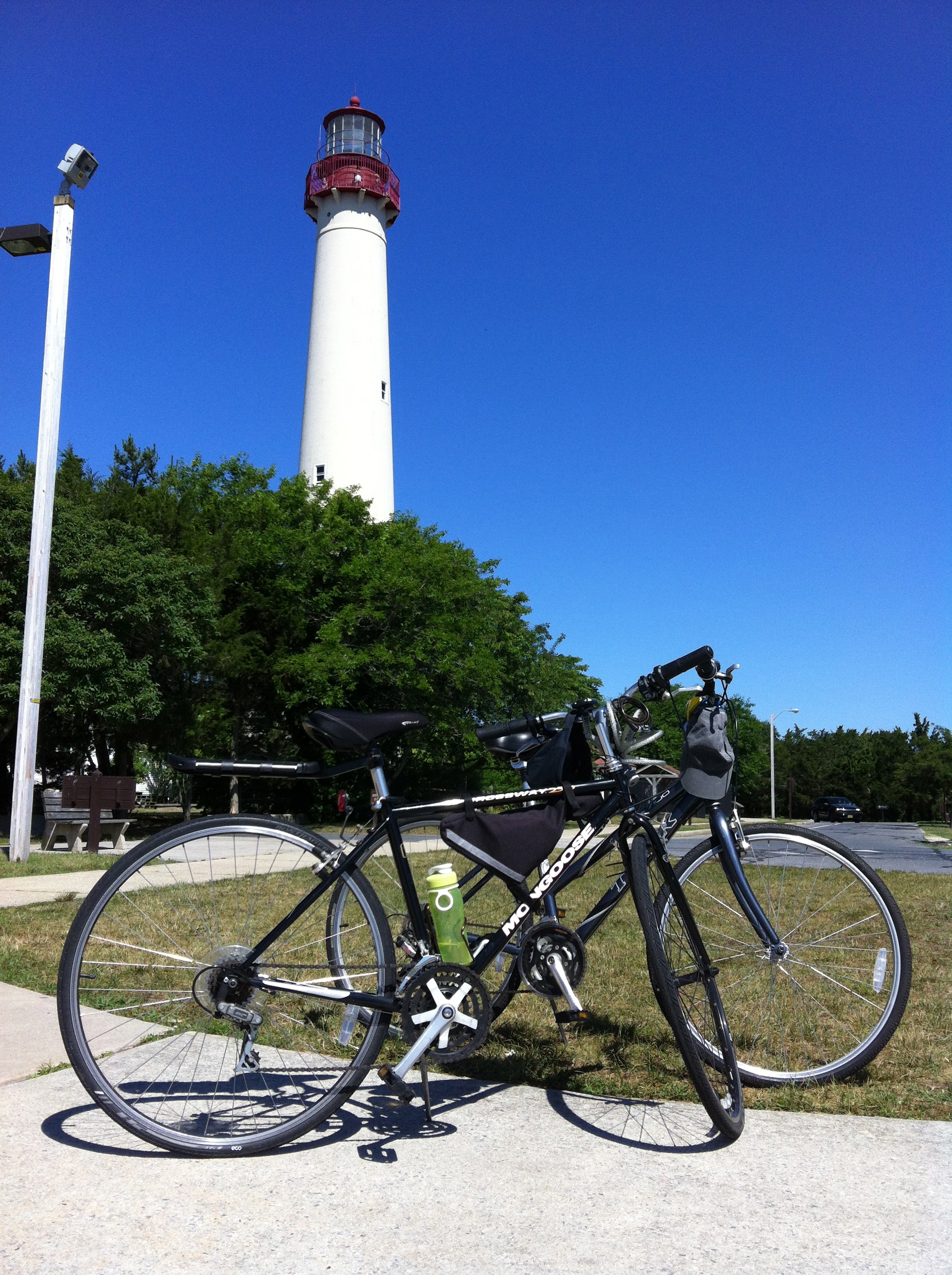
The Cape May lighthouse

The Cape May lighthouse

We celebrated the end of that day’s ride with a giant dish of ice cream — no guilt!

Our next ride, over the July 4th weekend, took us to the southern tip of the state. We rode from Wildwood Crest to Cape May Point, stopping by the Cape May lighthouse for good measure. We’d done that route before; it’s one of our favorites. Cape May is a lovely place to bike. Tally for the day: about 24 miles.

A couple of weeks later, back in the northern reaches of the Shore, we rode about 25 miles round-trip from Long Branch to Sandy Hook. We commemorated that ride with a lighthouse photo as well.

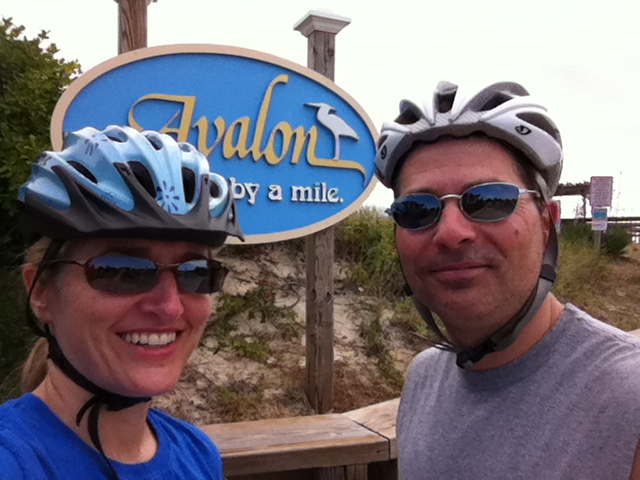
For leg number six, we went south again and rode round-trip from Wildwood Crest to the northern end of Avalon, about 27 miles.
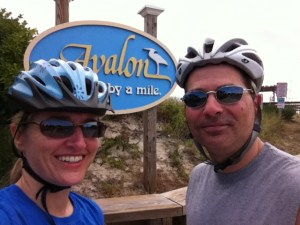
IMG_1567As we racked up the miles and pedaled through so many of the Jersey Shore’s towns, we were able to soak it all in much better than from the window of a car. Sure, we’ve driven pretty much every mile we rode, but the view from a bicycle is much preferred.

The summer was winding down and we had just three sections left to ride. We tried not to think about the calendar turning to fall, nor how we will possibly sustain so much activity over the winter months. I certainly don’t wish to spend 3 or 4 hours on the stationary bike at the gym!
IMG_1609

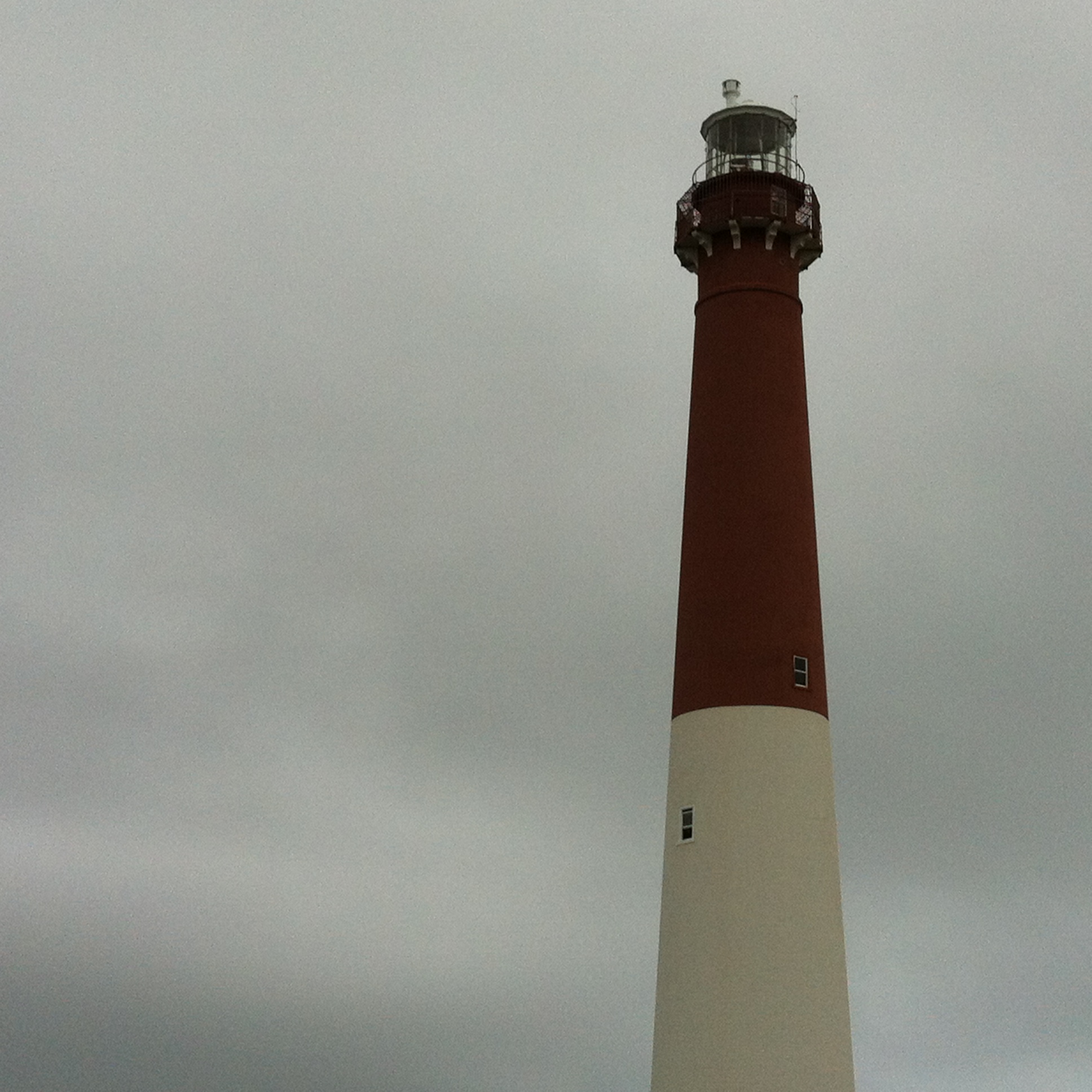
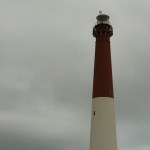
The Barnegat Lighthouse

We devoted one day to Long Beach Island. The weather was gloomy … a bit of foreshadowing to fall. But thankfully, not a drop of rain on our 38-mile journey. At the south end of the island, we watched surfers riding the somewhat stormy waves. And at the north end: another lighthouse!

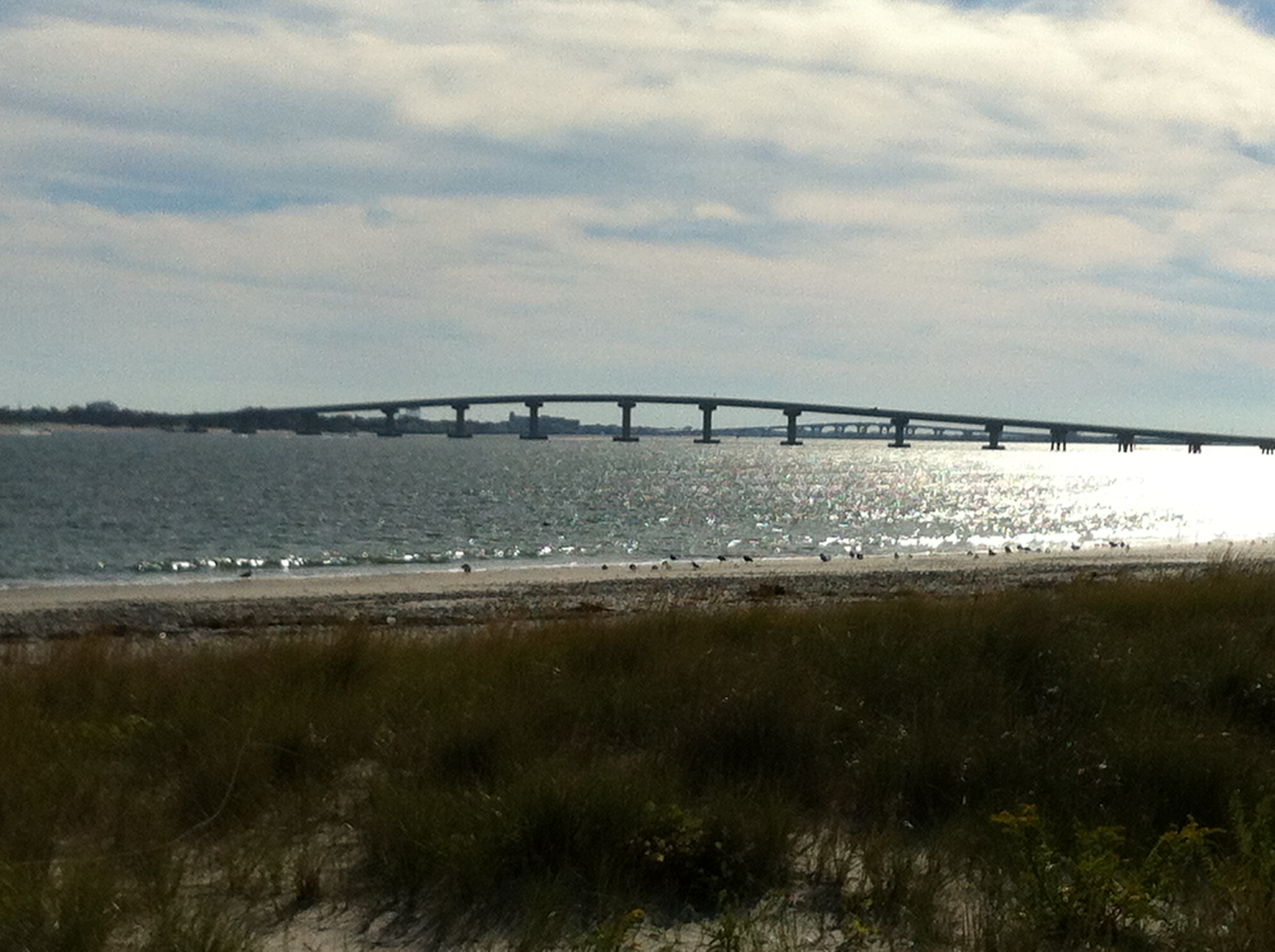
That left two legs, which we decided to do in one weekend. The best part is that we had the most perfect weather imaginable. Day one, the itinerary took us round-trip from the northern end of Avalon through Sea Isle City and Strathmere (quite possibly the narrowest stretch of the whole Shore) to the northern end of Ocean City. There loomed the largest and highest bridge of the whole top-to-bottom Shore route. Originally, I’d intended that we’d do it as part of our last ride. That day, though, we realized that the MS bike ride was in progress, with riders coming over that bridge (between Longport and O.C.). We thought it might make sense to take advantage of the safer conditions — plus we had the energy — so we added the bridge to that day’s ride. That brought our total for the day to about 36 miles.
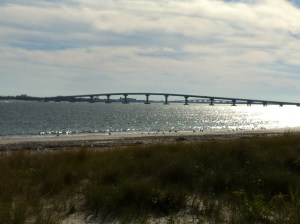
The bridge between O.C. and Longport, and the view from the top, looking toward Ocean City

The bridge between O.C. and Longport

I’m proud to say we both biked up the bridge, coming and going, without stopping or walking our bikes. I definitely chalk that up to the stamina I’ve developed from miles and miles of walking.

We stopped on the Ocean City boardwalk for slices at Manco and Manco Pizza — boy, did that hit the spot!

That left just one final ride, from the north end of Ocean City, through Longport, Margate, Ventnor and Atlantic City, to the tip of Brigantine and back. What a mix of sights and experiences that was. We decided to park by the iconic Lucy the Elephant in Margate and headed north. We were able to do several miles on the boardwalk before it got too crowded. Thankfully, it was late on a Sunday morning, so street traffic wasn’t too bad. We traveled along what we later learned is one of the worst (i.e. drug dealing dangerous) streets in town in our approach to the bridge to Brigantine. (Went a different route on the way back!)
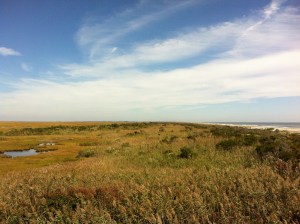
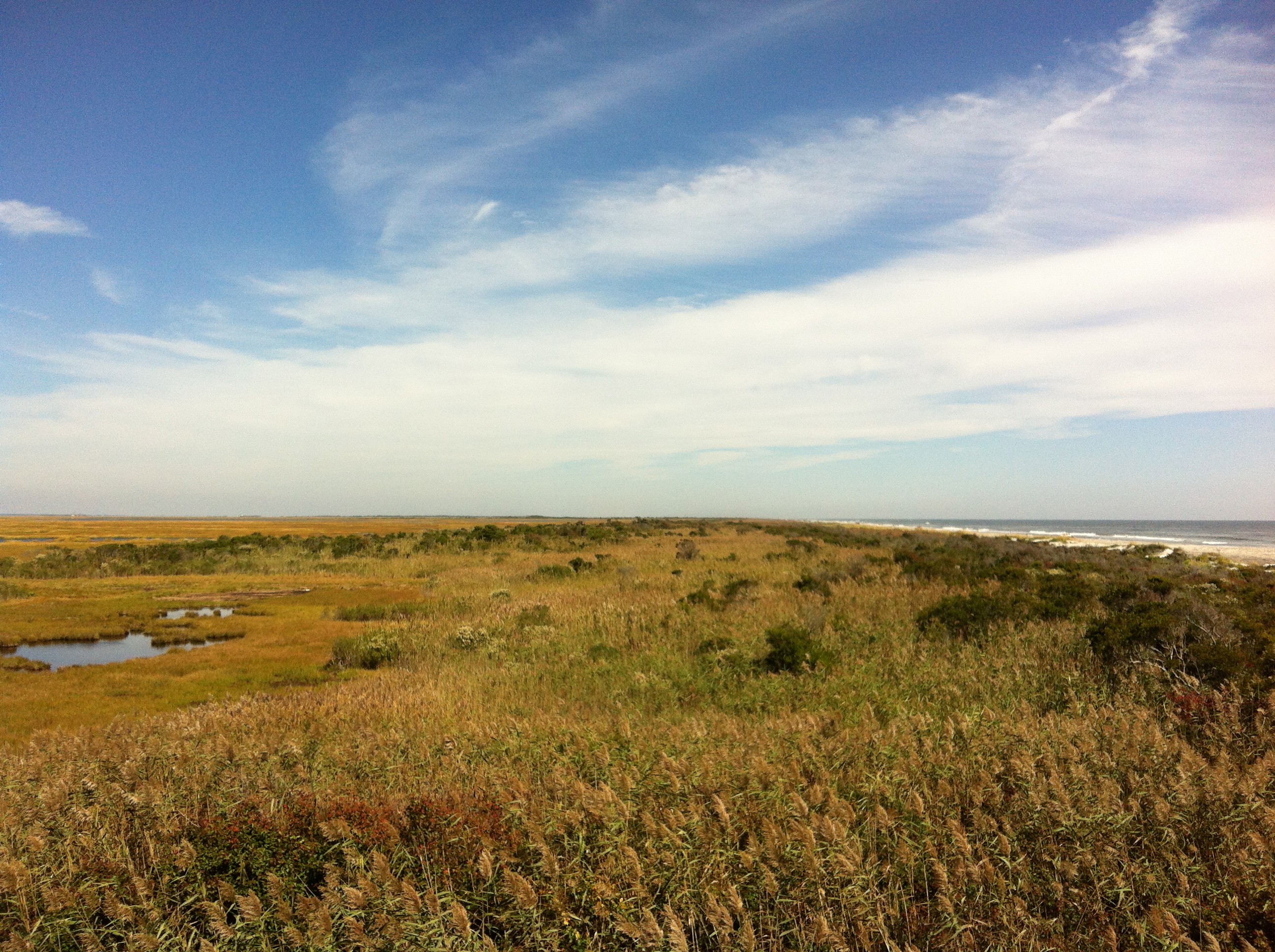
Looking north from Brigantine

Looking north from Brigantine

And we were pleased to discover Brigantine. Because it’s an island north of A.C., it’s not a place you pass through on the way to somewhere else. If you’re there, you intend to be (or you’re lost!). At the north end, we found a two-story viewing deck with a sweeping view of grasslands, inlet waters and ocean. I’m sure it’s a somewhat unknown spot!

As the day grew later, we made our way back to Lucy. Top of my mind was the thought: If you’re going to “Do AC,” don’t do it on a bike! Atlantic City is not bicycle friendly — no shoulders in many parts of town, lots of traffic and buses and shuttles to contend with. But it was really the lone negative in a summer of so many positives. Late in the afternoon, we circled back to Lucy, totaling about 31 miles for the day. And after having the ocean in our sights for the entire weekend, we made a beeline to the water’s edge, for a ceremonial and celebratory dip.

Our nine days of biking the Jersey Shore were so rewarding, so motivating, so enjoyable. Not only did we reap the endorphins of exercise but also the joy of being active in beautiful weather in the midst of lovely scenery.

Bicycling is a terrific form of cross training — it’s great cardiovascular exercise, plus it helps strengthen your legs. And you don’t have to do 20 or 30 miles in a ride. Even 30 minutes, or 8 to 10 miles at a nice steady speed, can fulfill the recommended daily amount of aerobic exercise.

Oh, and the title to this post? That’s the rough sum of all the miles we rode this summer. I’ll be the one with the icepack on my butt.
Pumping iron: Give it a try!

Walking is a terrific form of exercise, but as I note here, any walking program should be complemented by other forms of exercise, including strength training.

The CDC recommends that adults ages 18 to 64 do muscle-strengthening activities on two or more days a week. (That’s in addition to its advice to do at least 2 hours and 30 minutes of moderate-intensity aerobic exercise every week.)

strong-310874However, the CDC has found in a new study that only 23.7 percent of us ages 45 or older meet that recommendation. Further, that group is most likely to include women, widows, people 85 or older, people who are obese, Hispanics, and those who didn’t graduate from high school.

I am a 45-year-old woman, and I have to confess that in the past, most weeks I would barely meet that two-day minimum, unless I was taking a class at my gym. I think I tended to feel that strength-training didn’t provide as intense or get-my-blood-pumping a workout, and if I were going to work out, I wanted to feel like I did, sweat rivulets as proof.

But over the past few months I’ve managed to work strength training into my routine more often, and circuit training is the means. Due to a change in my work schedule, my workout time on weekdays became more constrained — 30 minutes, firm.

Some days I do aerobic activity, sure. But on others, I do an interval workout. After warming up for a few minutes, I do one minute of activity, take 20 seconds to change moves, then do another minute of activity, and so on, for 11 or 12 sets, ending with a couple minutes of cool-down.

During those one-minute intervals, I do various strength-training moves. I use dumbbells, machines at my gym and my body weight. Ideally I’ll do combo moves, such as squats standing to a shoulder press, to work both arms and legs. Every few intervals, I throw in a minute of cardio, such as jumping rope or running the stairs at the gym.

To my surprise, this does make me feel like I got a good workout. Knowing that I have just 30 minutes makes me focus and do my best to get the most out of it.

And I can feel assured that I’ll reap the benefits of strength training — among them, higher metabolism, (hopefully) more toned body parts and an improved ability to easily do activities of daily living.

So pick up a dumbbell and give it a try, or use your body weight to do exercises in any setting you like. Your body will thank you!

Not so sweet

Pretty much anytime you read or hear about exercise as a means to a healthy life, nutrition is mentioned next. They certainly go hand in hand.

Mmmm ... brownies.

Mmmm … brownies.

And just as it’s not always easy to find the motivation to exercise, it can be difficult to always follow a healthy, nutritious diet. I sure can attest to both. In my adult years, I’ve lost a total of 50 pounds over time, but have battled with that last 10 pounds, back and forth.

And my exercise has ranged from a big fat load of nothing to a list of physical accomplishments that includes four full marathons, a dozen half marathons and a 10-mile race thrown in for good measure.

I know I’m not alone when I say that my best intentions don’t always win out. I never met a dish of ice cream or a brownie that I could easily turn down. On the flip side, I’ve been known to binge on fresh summer fruit, too. (Is it bad to eat two mangoes in one sitting? They’re just SO good.)

Boooo ... sugar.

Boooo … sugar.

I know many people who have tried a sugar-free diet, both as a constant way of living and as a way to reset their systems. In the latter approach, they spent several days with zero sugar — not even in natural forms, like fruit — and slowly reintroduced it to their diets. Ultimately the intention is to weed out as much added sugar as possible. Natural sugar is not a bad thing, the key word being natural. But added sugar has no nutritional value and no reason for being, other than making foods sweeter and setting us up for a lifetime of cravings.

It’s an understatement to say that there’s a boatload of research on how bad added sugar is for us. There’s a new study that not only links it to heart disease but to a higher risk for death. Another study found that fructose (a form of added sugar) can create a domino effect that causes our “I’m full” sensor to essentially malfunction. Yet another looked at the link between sugar consumption and decreased brainpower. And that’s just scratching the surface.

Research also shows that sugar consumption creates a vicious cycle. You consume it, you crave it, you consume more, you crave more… you get the idea.

So: How much sugar is OK? What kind of sugar is OK? The American Heart Association recommends that women consume no more than 100 calories a day, or about 6 teaspoons’ worth, from added sugars. (For men, it’s 150 calories and 9 teaspoons.)

OK ... in moderation.

Way more than a daily allotment!

For mathematical purposes when you’re reading nutrition labels, 4 g of sugar = 1 teaspoon. So if you’re eating one granola bar that contains chocolate chips that has 12 g of sugar (as I saw on a label of one today), there’s 3 teaspoons, or half your allotment for the day. From one 4-inch granola bar!

It can be hard to determine what portion of the sugars listed on a label are natural and what portion is not. The AHA offers great information about this and much more, here.

Aside from information sharing, my purpose in posting this topic is to share my experience in going sugar-free. For the past 6 days, I’ve been participating in a sugar-free diet test panel. I spent the first 4 days with zero sugar, natural or otherwise. Yesterday, I was able to add fruit back in, along with one serving of refined whole grain.

I had previously scoffed quite seriously at friends who tried this diet. I believe in all things in moderation, I said. Cutting something out just sets you up to really crave the taboo item, I asserted.

So what changed? I read more of the research. I took into consideration my friends’ raves about how great they felt. I realized that I needed a reset of my own — a final piece of the puzzle, if you will, in trying to live as healthfully as possible and eat cleanly.

Yum ... natural sweetness! / Photo by Chris M. Junior

Yum … natural sweetness! / Photo credit: Chris M. Junior

Do I miss ice cream? Yes. Surprisingly, I’m really craving some pizza. (Tomato sauce is generally loaded with sugar, and the white dough ain’t so great, either.) But I’m finding that I can survive without my daily Diet Coke, and that I can pass up the doughnuts and M&M’s in the office. I still love fresh fruit and consider it a yummy treat. And the more days that go by on my “eating clean” calendar, the better and more revved-up I feel. (The weight loss is a welcome side effect too!)

I still believe in “all things in moderation” — but I don’t think I was eating sugars in moderation. I’ll revisit the topic at the end of the test panel time period and let you know how I’m feeling then. In the meantime, I welcome feedback and/or comments if you’ve tried this way of eating yourself.

What about hand weights?

After reading my last entry, Should you wear ankle weights?, several people asked me, “What about wrist or hand weights?”

Limit weights to non-walking workouts. Photo credit: Tiverylucky/FreeDigitalPhotos.net

Limit weights to non-walking workouts. Photo credit: Tiverylucky/FreeDigitalPhotos.net

I’m happy to address that topic.

Generally, my answer is the same: I would not recommend it. And generally, the reasons are the same.

First, I think it’s best to focus on walking while one is walking — and with the proper form and intensity, walking can be a terrific workout all on its own. (Want to learn how? Contact me.)

Also, carrying equipment while walking can increase the chances for injury. It can put unnecessary stress on the joints and muscles of the arms.

Plus, you don’t get much bang for the buck when carrying weights. Doing so increases your heart rate and calorie burn by only a small amount. You can get a good boost instead by employing techniques that can increase the intensity of your workout, such as doing intervals or increasing your overall speed.

In other words, the possible small benefit is countered by the larger risk for injury.

Should you wear ankle weights?

Several people have asked me whether they should wear ankle weights when walking, in part to gain some extra calorie burn and/or to boost the workout aspect.

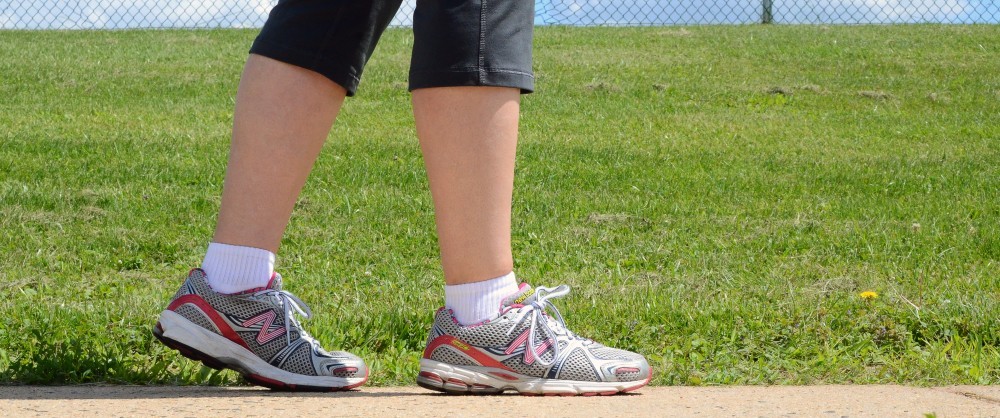
The short answer is no — you should not wear ankle weights while walking.

be

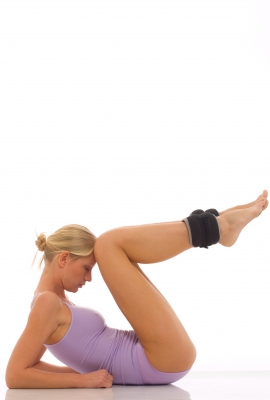
Want to use ankle weights  while working out? Limit it      to something like this: while doing stationary strength training. Photo credit: Ambro/FreeDigitalPhotos.net

Here is the long answer:

  • Strapping weights around your ankles tightly enough so they don’t jostle while you move causes compression, which could compromise blood flow to your feet — not advisable.
  • Ankle weights are an unnatural distribution of extra weight. To concentrate added weight in one spot, particularly around a joint, can cause undue exertion and injury.
  • Wearing ankle weights can throw off your gait. That can tax your joints — not only your ankles but also your knees and your hips, causing strain and injury.
  • Having something strapped around your ankles may pose a tripping hazard. As you walk, you might get tangled up in the extra bulk. Or you might subconsciously widen your legs to keep the weights from bumping or rubbing together, which brings us back to the previous bullet point.
  • Concentrating weight at your ankles — even if only a few pounds — creates a muscle imbalance. Your quadriceps (or the muscles on the front of your thighs) suddenly have more work to do, because that is the muscle that lifts your leg to bend your knee. But your hamstrings (the muscles on the back of your thighs) don’t have an equal extra job.

If you want to boost the effects of your walk by wearing ankle weights, I’d suggest you reconsider. Keep weight training to just that — a weight training session. And keep your cardio efforts to an aerobic exercise session. You’ll get better results in both situations. (However, something like a circuit class, in which you alternate cardio bouts with strength training moves, is designed to be safely effective.)

All that said, if you are looking to turn your walk into a more serious, results-bearing workout, let’s talk. I can help you do so, without extra equipment and with lower chances of injury.


Today’s walk

This morning I did a combo walk — a couple miles on the beach and a couple on the boardwalk/sidewalk. Walking on sand helps challenge your stability. Bonus: I saw dolphins leaping in the waves. Great start to the day!

Friday morning on the boards

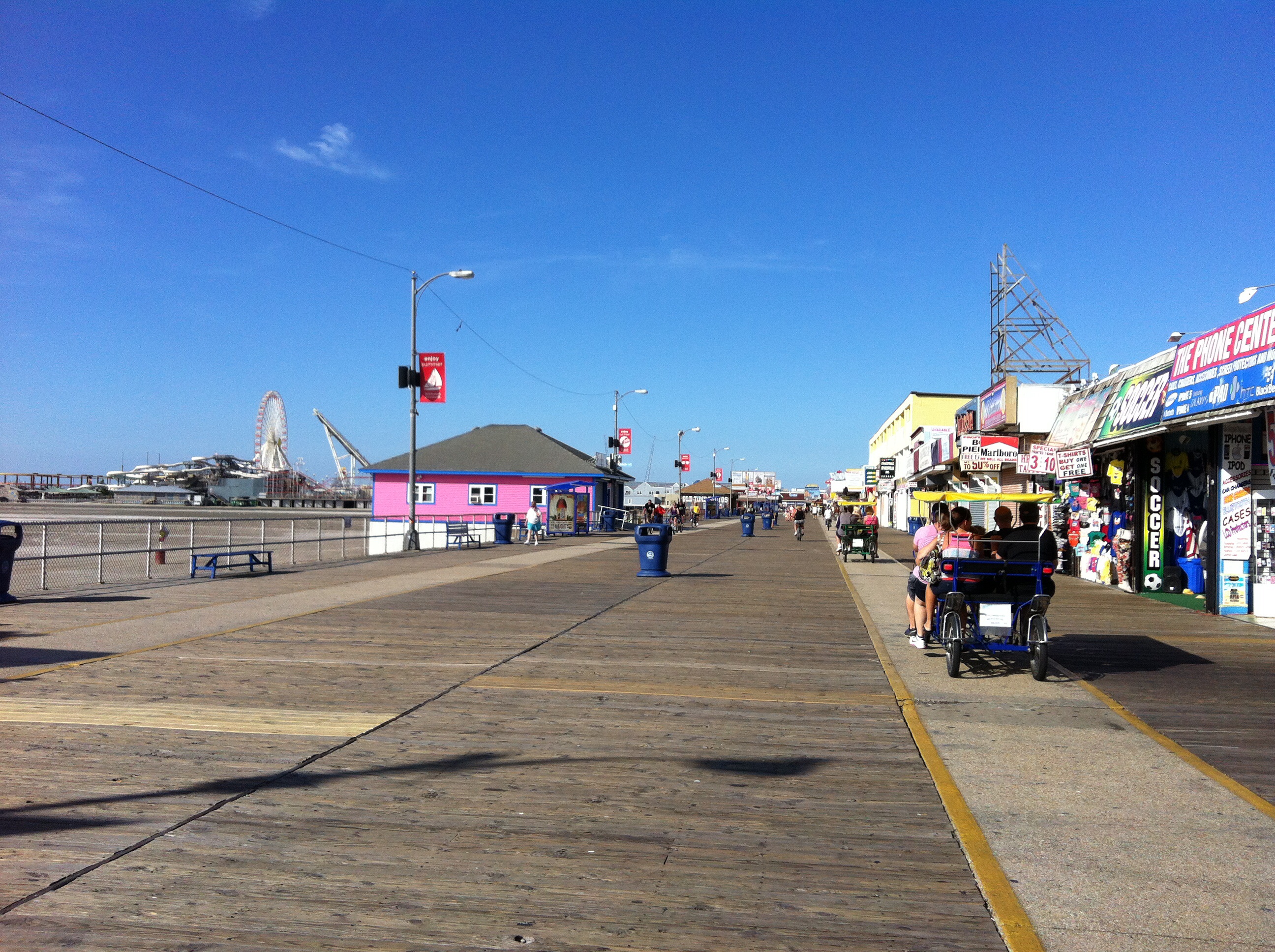
Friday morning on the boards

Save $10!

Register for the Delaware & Lehigh Heritage Half Marathon by Sunday (Aug. 31) before the fee goes up by $10.

This half marathon, to be held on Sunday, Nov. 2 in the Lehigh Valley of Pennsylvania, is an ideal race for walkers — and in fact is focusing on walking participants. The time limit is 4.5 hours, which is very generous and takes a lot of stress out of the event for first-timers. That time limit translates to a 20-minute-mile pace. (Info on course under picture…)

Along the course of the Delaware & Lehigh Heritage Half Marathon, 2013

Along the course of the Delaware & Lehigh Heritage Half Marathon, 2013

The course is beautiful and flat — the first couple of miles are in the town of Northampton, Pa., and the rest is all along the Lehigh River, surrounded by colorful fall foliage.

Just like there are usually pace runners in most half and full marathons, this race will have pace walkers to help the walking participants keep a steady stride. In fact, I will be one of the pacers!

Check out the registration info here and consider joining in the walking fun. Space is limited, so don’t delay in signing up. I hope to see you there!

Thinking caps and walking shoes

New research has found that walking boosts your creativity — 81 percent of people studied were more creative when walking than sitting.

“Walking opens up the free flow of ideas,” the researchers state, “and it is a simple and robust solution to the goals of increasing creativity and increasing physical activity.”

Researchers at Stanford University tested subjects on creative thinking while the subjects were walking and seated as well as after they walked. Scores were higher for the walkers than the sitters, but the post-walkers also showed improved scores, what the researchers called a residual effect. The research was published in the Journal of Experimental Psychology: Learning, Memory, and Cognition.

So: Feeling stumped? Trying to determine how to proceed on a project, a task, a plan? Take a walk, and the light bulb over your head might just illuminate.