
Unknown's avatar

About Walk With Joelle

Walking coach and ACE-certified group fitness instructor

Shame on you, restaurants

fortune-cookies-354525_1280Today I went out to lunch with some friends from work. We went to a Chinese restaurant. The menu featured the usual Chinese restaurant fare — you know, lo mein, egg rolls, beef and broccoli, General Tso’s chicken, etc.

One section of the menu featured some appealing options. You could choose from chicken, shrimp or scallops. Then pick three veggies — choices included mushrooms, bell peppers, baby corn, carrots, snow peas and many more. Have it all steamed or stir-fried, with a choice of rice (fried, white, brown).

Sounds great, right?

Until you see that the heading for this section of the menu is DIET SPECIAL.

It gave me a slight pause upon ordering (chicken, bell peppers, broccoli and asparagus, steamed, with brown rice, thank you). But then the more I thought about it for the rest of the day, I was the one who was steamed.

Why not call this section HEALTHY OPTIONS? Or HEALTHY CHOICES? Or FRESH CHOICES? Or anything other than DIET SPECIAL? Dubbing it as such adds an unnecessary sheen of shame to the ordering process. Do I need to be on a diet if I’m ordering from that section of the menu? Should I feel like a glutton if I order from the non-diet special section of the menu? Why categorize it with a scolding spin?

Because the thing is, choosing to eat lean protein and fresh veggies, prepared in a healthy way (e.g., steamed, sautéed, broiled) and accompanied by a whole grain (such as brown rice), shouldn’t be considered a DIET SPECIAL. Or any form of dieting, for that matter. It should be the way we eat the majority of the time. There’s not really a need for dieting when one eats whole foods in as close to their original state as possible. And there’s no need to categorize it as such.

When I hear “diet special,” I think of diner throwbacks like an ice-cream-scoop-shaped heap of tuna salad with cottage cheese on a lettuce leaf. I think of a meal that’s more of a chore because clearly, by its categorizing, it probably isn’t tempting nor appealing. It doesn’t sound at all rewarding or pleasurable.

I don’t know about you, but when faced with myriad choices on a restaurant menu, I sometimes have a hard time making the healthier choice. And when that choice has a built-in stigma — because it’s dubbed as DIET — it can make me less inclined to make that choice. I can almost hear a little voice in my head: “Who are you to tell me I should have a diet meal?”

My lunch was tasty and fresh and made me feel clean and energized. Ideally, that how most meals should feel. Without the shame of labels.
Move to the music

For a very long time, I exercised without the aid of an MP3 player. My reasons were many: I thought it would be distracting … thought it would be unsafe (when walking outdoors) … thought it would be too much hassle to remember to pack one more thing in my gym bag … thought it wouldn’t make any difference to my workouts.

Boy, was I wrong.

Five years ago, some of my best marathon buddies surprised me with the gift of an iPod, plus CDs of their favorite walking music.

So I loaded the CDs onto the iPod and hit the pavement.

Wow! I didn’t pay any attention to how much time I was out walking and instead eagerly awaited the next song and its tempo, enjoying the boost in energy the music gave me.

Then I used my iPod while on the treadmill. Suddenly I noticed how certain songs aligned with certain treadmill speeds. I realized I could make a whole playlist of songs whose tempo matched my usual speed — or my desired speed — and customize my workouts.

For several of my next treadmill sessions, I scribbled down songs and their corresponding speeds. Then I found websites that listed songs’ beats per minute, or BPM. That enabled me to match songs to treadmill/walking speeds and find songs that best worked for me. The next step: putting together a few different playlists of different lengths, including slower warm-up and cool-down time.

(As a fitness instructor, I now have a secret source of prearranged playlists: Several companies put together CDs geared to certain BPMs for certain types of exercise. To conform to copyright law, the CDs do not feature the original artists, but sometimes it’s hard to even tell.)

Much research has been done on whether music has a positive effect on one’s workout. Among the findings are these benefits:

  • Reduced feelings of fatigue
  • Increased feelings of mental motivation
  • Increased endurance
  • Improved motor coordination

The research results are varied in terms of measuring the exact effects — but it’s clear that choosing music that moves you can, well, help you move.

And beyond that, there are no rules! Choose music that you find motivating with no apologies. Guilty pleasures? Why not! Whatever you hear through your earbuds is your little secret. If it gives you a boost, that’s the point. Match the music to your mood — or your desired mood. I have a CD of heavy metal songs (like Metallica’s “Enter Sandman” and Pearl Jam’s “Even Flow”) for when I really need a kick in the pants to get going. I like to listen to Billy Idol’s “Greatest Hits” on the stationary bike. Sometimes dance music works best — favorites include C+C Music Factory’s “Gonna Make You Sweat” and Justin Timberlake’s “Sexy Back.”

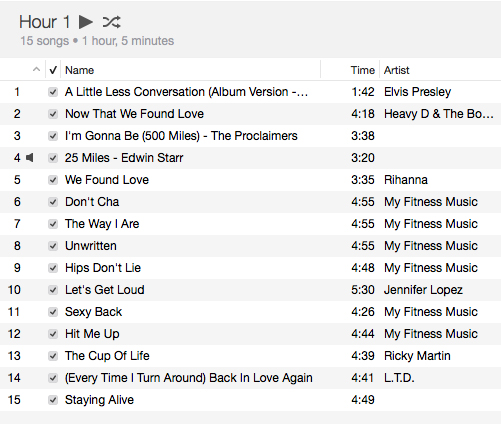
Here is one of my most-used playlists, which I created for walking. It’s about an hour long, starts and ends at about 3.5 or 3.6 mph, and peaks at about 4.1 or 4.2 mph.

playlist screen grab

It’s a mix of a few songs from those original CDs from my race pals, some songs from instructor CDs, and a few tunes that caught my ear as having a good beat or feeling inspiring.

If you haven’t tried working out to music (separate from a group class, of course), give it a try and see if it works for you. Just press play! (And feel free to share your favorite workout tunes in the comments!)

Thanks to loyal WWJ reader Lauren Z. for this post idea!

Just 20 minutes!

We’ve heard time and again that being obese or overweight is, of course, not good for your long-term health. The same goes for being inactive and rarely exercising, no matter what you weigh.

Now, new research finds that being sedentary is the more deadly of the two.

BUT…

The research also notes that a brisk walk — as short as 20 minutes — can help counteract the dangers.

clock-36965The study was conducted by researchers at the University of Cambridge and was just published by the American Journal of Clinical Nutrition. Researchers analyzed about 12 years worth of information on 334,000 men and women, including height, weight, waist circumference and self-reported levels of physical activity.

The researchers state that a moderate amount of physical activity (compared with none) was the key to lowering the chances of premature death. They estimated that it could reduce that risk by 16 to 30 percent. By “moderate,” they mean that which burns about 100 calories a day.

Twenty minutes goes by in a flash — it’s about the time it would take to iron an outfit for work, zip across town to go to the post office, watch most of an episode of your favorite sitcom (FF’ing through commercials).

Or … squeeze in a life-saving walk!

Words of wisdom

“Physical fitness is not only one of the most important keys to a healthy body, it is the basis of dynamic and creative intellectual activity.” — John F. Kennedy

Winter survival plan

mountain-bike-61097So it’s just about mid-January. Spring is more than 60 days away. You need a plan to get you through the next couple of dark, cold months — a reason to haul yourself out of bed or off the couch and work out. A way to stay active until the change of seasons.

Signing up for a spring race is a great motivator!

Whether it’s for a 5K, a half marathon or even a full marathon, having a training plan to stick to can help you survive winter and look forward to spring (not that you aren’t already dreaming of warmer days, right?).

Say you’re thinking of a half marathon. If you’re a beginner, you’d need at least 16 weeks (4 months) to train for the distance. If you’re experienced — that is, you’ve done a half marathon before or do significant walking already — you need about 10 to 13 weeks (3 or so months). And how ’bout that, the timing is perfect to start now and be ready for a race in April, May or June, depending on your experience level.

With properly layered cold weather gear, you can do training walks outside in all but the most brutal of weather. In a pinch, you can clock several miles on the dreadmill. I’ve done 8 miles on the treadmill at my gym. It was pretty boring, but to keep it from being as deadly, I did the first 4 on one treadmill, watching TV, and the second 4 on a different treadmill on another floor, watching a Zumba class in action.

In any case, I can help you put together a training plan and prepare for your event. Visit this page. And in the meantime, here are several suggestions for spring races. These are all in the New Jersey tristate area. If you live elsewhere, visit this site to search for an event in your neck of the woods.


Philadelphia Love Run Half Marathon

Date: March 29

Info: Take a tour of the city of Brotherly Love. The race starts and finishes by the iconic Philadelphia Museum of Art, the giant stairs of which Rocky raced up in the same-named movie. The course circles into Center City and back, then goes out and back along the Schuykill River.

Note: The race is already 85 percent sold out, so don’t delay! This is the race’s second year. I did it last year with friends. It was rainy and chilly, but the course volunteers were terrific! Weather can really vary in late March, so this year might prove to be balmy and sunny.

Website: www.cgiracing.com/theloverun/


Unite Half Marathon and 8K at Rutgers University

Date: April 12

Info: The course for this half marathon meanders through several of the campuses of Rutgers University. I did this race two years ago on a cool spring morning, the weekend after the Boston Marathon bombing. Race organizers passed out hundreds of small American flags to participants, and many racers had tributes to Boston on their shirts and such. The 3.5-hour time limit is welcoming to walkers.

Note: This race, too, is quickly filling up and is already at 70 percent capacity.

Website: www.cgiracing.com/unite/


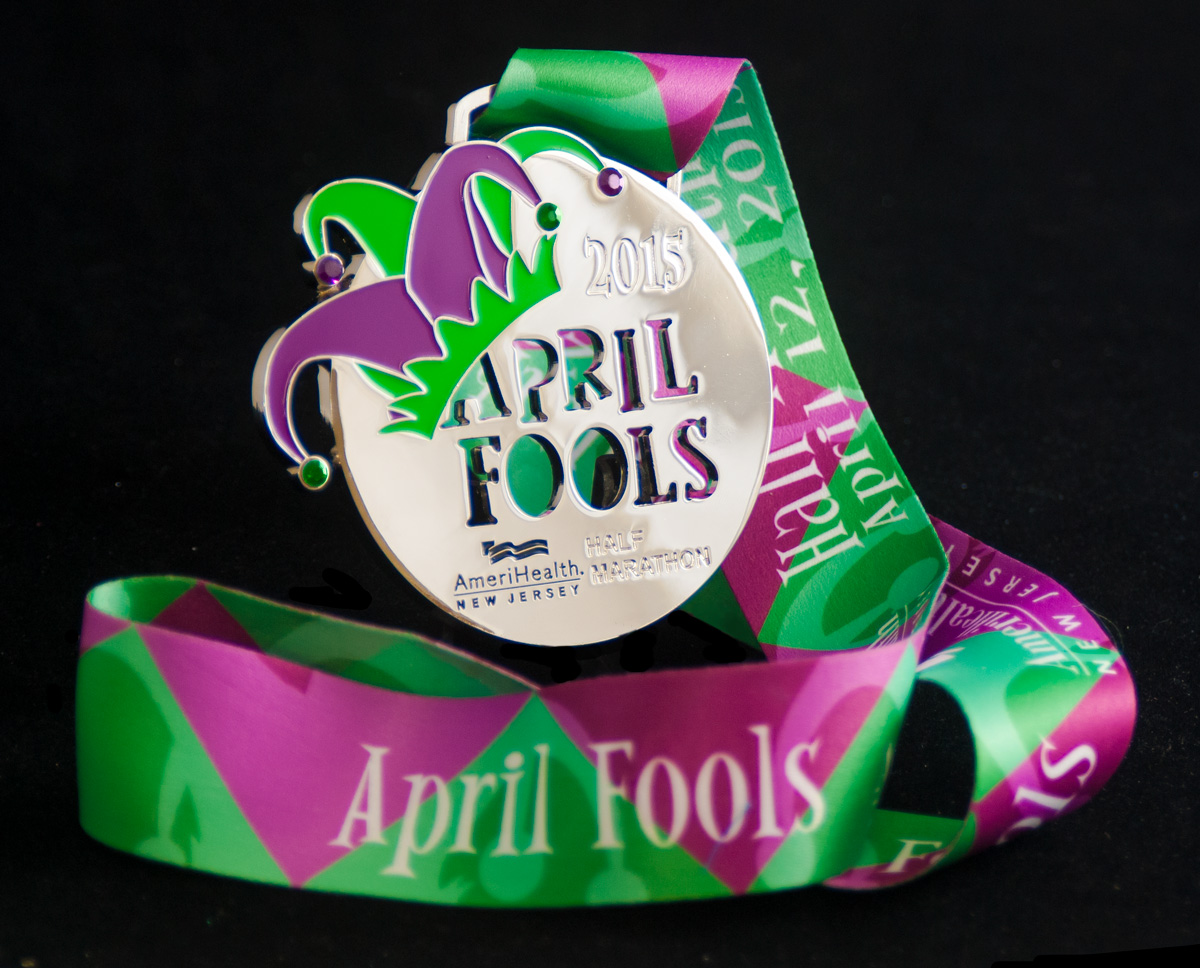
The April Fool's race medal.

The April Fool’s race medal.

Atlantic City April Fool’s Half Marathon

Date: April 12

Info: More than half of this course is on the boardwalk, with a lovely ocean view. The rest goes through neighboring towns, and the entire course is super flat. The weekend also includes a 7K and an 11K. The whole race has a fun spirit about it.

Website: www.acraceseries.com/April_Fools.htm


More/Fitness Women’s Half Marathon

Date: April 19

Info: This event, sponsored by the magazines More and Fitness, is for women only. The course is centered in NYC’s Central Park. Demand is high, so if you’re interested, look into registering pronto.

Website: morefitnesshalf.com/race-day


New Jersey Marathon & Half Marathon

Date: April 26

Info: Here’s another flat race with a course that in part goes on a boardwalk with an ocean view. It starts and finishes on the boardwalk in Long Branch, NJ.

Website: www.thenewjerseymarathon.com


Airbnb Brooklyn Half

Date: May 16

Info: This race is among those in the New York Road Runners stable of events. In particular, the NYRR holds a five-borough series. I’ve done the Queens leg but have four more to go! Someday… Registration is not yet open.

Website: www.nyrr.org/nyrr-5-borough-series


The Wild Half (Wildwood, NJ)

Date: May 17

Info: Are you noticing a theme here? This is yet another race in a beach town. This one is on my to-do list, for sure, but 2015 won’t be my year due to conflicting plans. The weekend also includes a 5K and an 8K.

Website: www.runwildwoods.com


ODDyssey Half Marathon

Date: June 14

Info: And yet another Philadelphia race, at a time of year when decent weather is a better possibility!

Website: www.oddysseyhalfmarathon.com


This list offers a starting point but I’m happy to help you find a race that meets your needs. Contact me — or share your suggestions in the comments.

Today’s walk

With wind chills in the single digits this morning, I opted to join my husband at the gym instead of layering on the cold weather gear and braving the outdoors.

So, bring on the dreadmill! (That’s not a typo, even though my computer keeps wanting to correct it. It’s a nickname for the treadmill, most commonly used this time of year.)

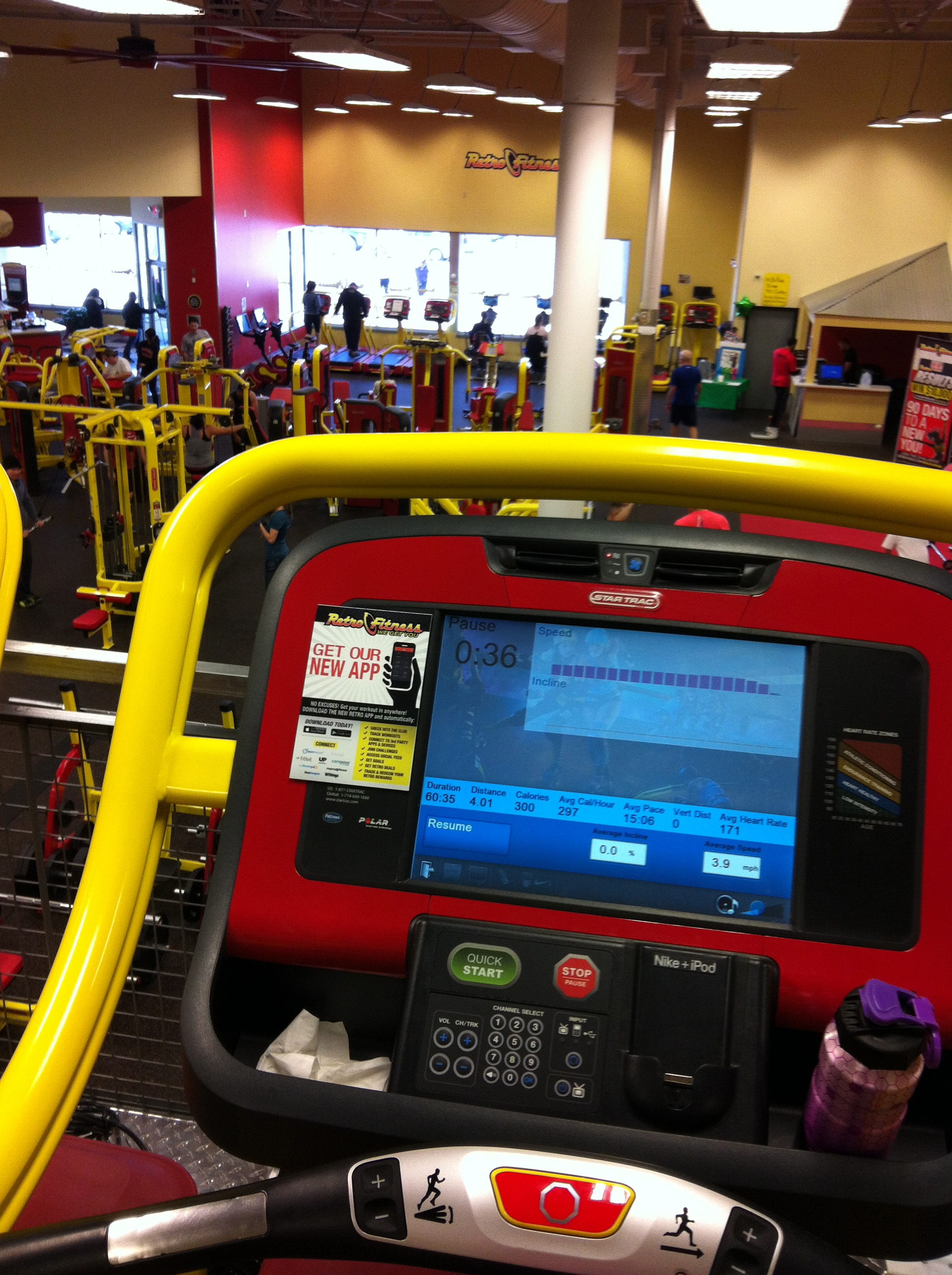
I chose one on the second floor of the gym, so I could at least distract myself by watching other people work out (which actually was more motivating than I expected). I dialed up my iPod’s hour-long walking playlist, which I set up to correspond to certain walking speeds, and got started.

One hour, 4 miles and 300 calories later, amen for those feel-good endorphins brought on by exercise!

Coming soon: A post on maintaining an exercise plan through the doldrums of winter. In the meantime, here was my morning view.

Dreadmill!

Dreadmill!

Top advice for keeping a resolution

To start, don’t call it a resolution. (More on that in a minute.)

It’s January 4. How’s it going with your resolutions? Have you broken any yet? I don’t ask to be mean — it’s just kind of how resolutions go. According to research in the Journal of Clinical Psychology, about 45 percent of us make New Year’s resolutions — but only 8 percent are successful in accomplishing them. Those aren’t promising odds!

calendar-478033_1920But I’m here to help with some suggestions for setting goals that you’ll have more success keeping.

First, I’d like to share an idea by fitness expert Chris Freytag (an ACE colleague with whom I worked on Team Prevention), who advises: “Don’t make resolutions… Set intentions.”

I like the spin this puts on goal-setting. It adds a mindfulness approach that can be quite inspiring.

Another great idea comes from my friend Melanie A. In 2013, she set monthly resolutions instead of yearly ones. As she noted, “If I can change one necessary thing about my life each month, 12 positive changes will equal big victory!” And who doesn’t like achieving 12 goals instead of just one?

Melanie’s idea ties into the best advice I can give about resolutions. To help ensure that you achieve your goals, they should be SMART. That is:

Specific: The more specific, the better. Break it down. “Get in shape in 2015” is a good goal, sure. But “Go to the gym three days a week” is even better, and more likely to help you achieve the original intent.

Measurable: How will you measure achievement? Keeping a food or exercise journal, for instance? Tracking your spending and saving, if your goal is financial?

Attainable: This is similar to the specificity factor. Again, break it down. Can you visualize yourself achieving your goal? This step is closely related to the next…

Realistic: Shooting for the moon is inspiring but not always easily achieved. Deciding to do a triathlon might sound great, but have you done as much as a 5K? Is your goal something you can achieve with current resources and/or knowledge? If not, can you easily obtain the resources needed?

Timely: The goal should include a time frame in which the goal will/can be achieved.

With all these factors, you also will want to ask the W questions: Who, what, where, when, which, why? Asking yourself those questions about your goal can help you make your goal a SMART one.

Here’s an example. A common resolution is: Get in shape this year.

But how and when will you do so? A SMART version of this goal might be: Join a gym and work out three days a week.

Or perhaps your goal is: I will lose weight this year. The SMART version: I will cut out processed foods and lose 5 pounds by spring. That gives it specificity, makes it measurable, and adds a time frame.

Breaking goals into smaller, specific pieces doesn’t dilute the original goal. It helps make your goal more achievable. Here’s wishing you luck and success in 2015!

Today’s walk

On a brief weekend getaway from the cold Northeast, it was heavenly to take a 4-mile walk in short sleeves this morning!

Happy walking!

A quiet morning walk in my mom's neighborhood.

A quiet morning walk in my mom’s neighborhood.

There’s an app for that

In the Fitness Gift Guide posted last week (and a much earlier post), I promised to share info about fitness apps that I’d recommend. You might wonder how you give someone an app as a gift. The easiest way is with a gift card to iTunes or their service’s app store.

iphone-410311Without further ado…

There are a multitude of apps that help you track your fitness activity, whether it’s walking, running, biking or something else. Most use GPS to track your distance and, combined with the duration of your activity, calculate your speed. You can often save your route, for reference or repeating. Many apps let you connect with friends, to compare workouts and cheer each other on. And many apps can be linked to your Facebook or Twitter account, too, or your FitBit or similar wearable tracker.

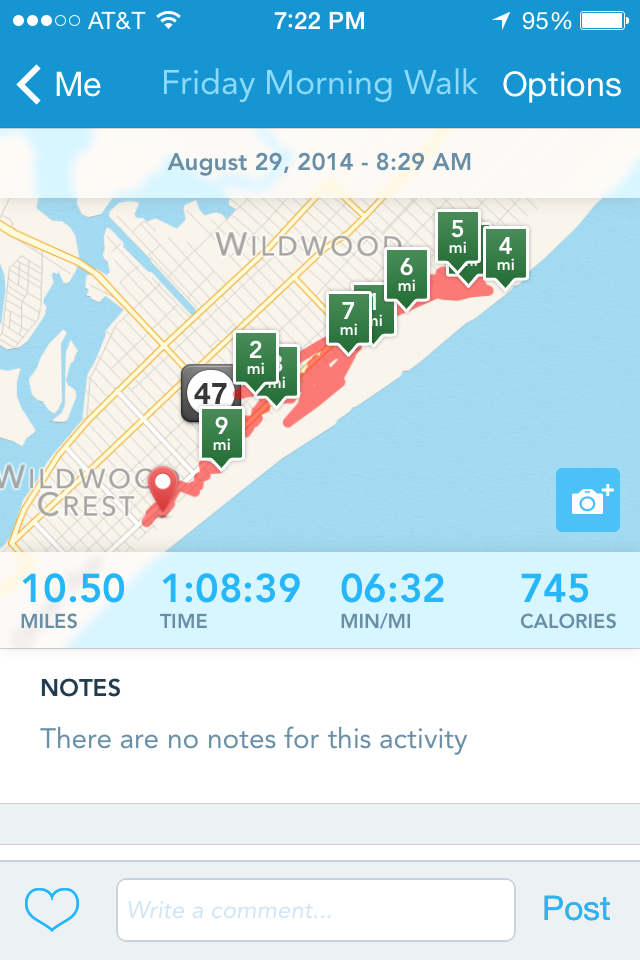
A saved RunKeeper activity shows distance, time and even calories burned (provided the user inputs his/her weight).

A saved RunKeeper activity shows distance, time and even calories burned (provided the user inputs his/her weight).

The app I use most often is RunKeeper. Don’t be fooled by its name — it tracks more than runs. I used it on many bike rides last summer but have also used it for many walks short and long. With RunKeeper, you can set goals, see your best times/results and view your activity history. Settings allow you to hear audio cues on many aspects of your activity while you’re doing it, such as distance, time, average pace, split speed and more. When you complete an activity, you can save it so you can refer back to the details (pace, time spent active, etc.).

Very similar to RunKeeper is an app called MapMyWalk. (There’s also MapMyRun, MapMyRide, MapMyFitness, MapMyHike…) It has many of the same features as RunKeeper. One difference is its Gear Tracker: You can list a pair of shoes and it will track the mileage on them and let you know when you are due for a new pair. It also has a food logging feature.

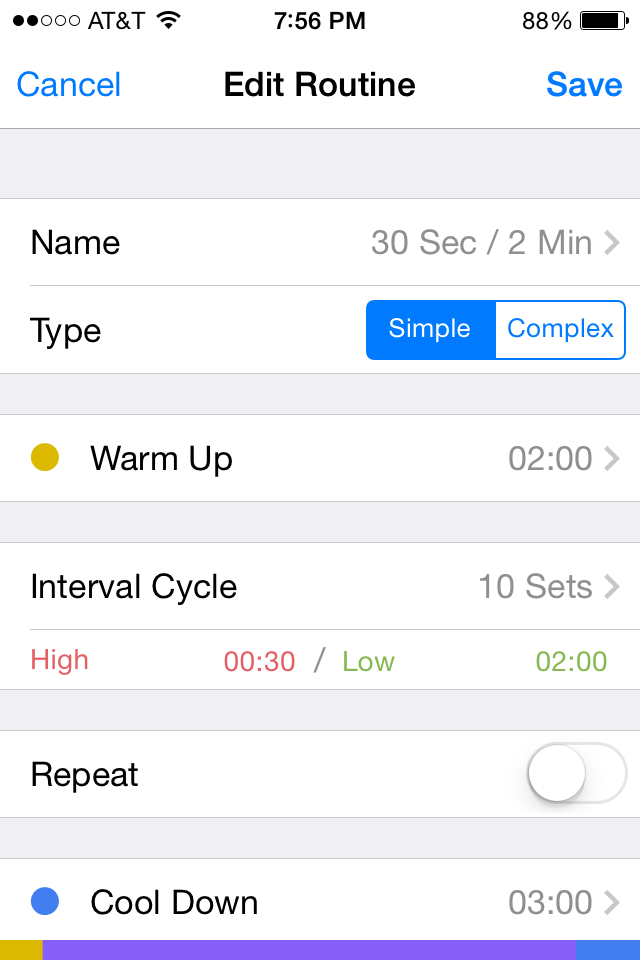
The options are pretty much limitless with Interval Timer.

The options are pretty much limitless with Interval Timer.

One app I use in my personal workouts and in my class is called Interval Timer. This app lets you set up an interval series with audio cues. Suppose you want to do a 40-minute workout focused on circuit training. You can set your warm-up time, interval length (say, 1-minute “high” sets followed by 20-second “low” sets — a quick rest or opportunity to switch to the next circuit), how many intervals, and a cool-down period. Each change can be signified by a sound of your choosing. (I like the boxing bell!)

The above apps are great if you’re motivated to work out. But what if you need a nudge?

If you’d like to feel that your walk or run serves a bigger purpose than your own fitness, consider CharityMiles. You walk or run, and the app’s sponsors pledge money for each mile to the charity you choose in the app. Charities include The Michael J. Fox Foundation, Alzheimer’s Association, Feeding America, Stand Up to Cancer, Wounded Warrior Project and many many more.

And if you really need a kick in the pants to get to the gym or to work out, consider GymPact. When you sign up for GymPact, you pledge how many days a week you’ll work out and how much you’ll pay if you don’t. Input your credit card info and be sure to engage the app when you work out (it must be a minimum of 30 minutes per session, and you can check in at your gym via the app, use its motion sensor or link it to an app like RunKeeper), and avoid getting hit with a fee. Bonus: Fulfill your weekly pact and the app pays you! Granted, it’s a negligible amount, but I racked up $135 over a year or so, which more than paid for a new pair of sneakers. (The app has a fruits and vegetables version too — pledge how many servings of produce you’ll eat a week, upload pictures of said servings for the app’s community to confirm, and pay or earn accordingly.) I can assuredly say that using this app made me drag my butt out of bed to hit the gym many times when I wouldn’t have otherwise!

And that’s the best thing about fitness apps. They inspire, they motivate and they make working out more engaging and keep you more involved. So, please share: What’s your go-to app?

Fitness gift guide

christmas-box-71758If you need gift ideas for the walker and/or exerciser in your life, you’ve come to the right place. (Or maybe you are the walker and/or exerciser, in which case you might want to send a link to this post as a “hint, hint” to someone.) There’s so much gear out there, it’s hard to know what is really useful and what’s not. Here are some suggestions for items that I’ve found to be useful or even indispensable while out on a long walk or exercising at the gym. (I’ll be highlighting apps in a separate post soon.)

Workout wear

Before you can set out on a brisk walk or hit the gym, the right clothing is important. The good news is that you don’t generally have to go to a specialty store anymore — places like Kohl’s and even Walmart have a decent selection of workout clothing. Look for wicking material as a starting point — it’s preferable to cotton because it helps sweat dry quickly and keeps your workout clothing from getting damp. It’s not much fun to have a sweaty shirt clinging to you while you’re midway through an hour-long walk or run.

One feature that is usually quite welcome is some sort of pocket. Zipper pockets are great for securely tucking away a house key or tissues when out on a neighborhood walk.

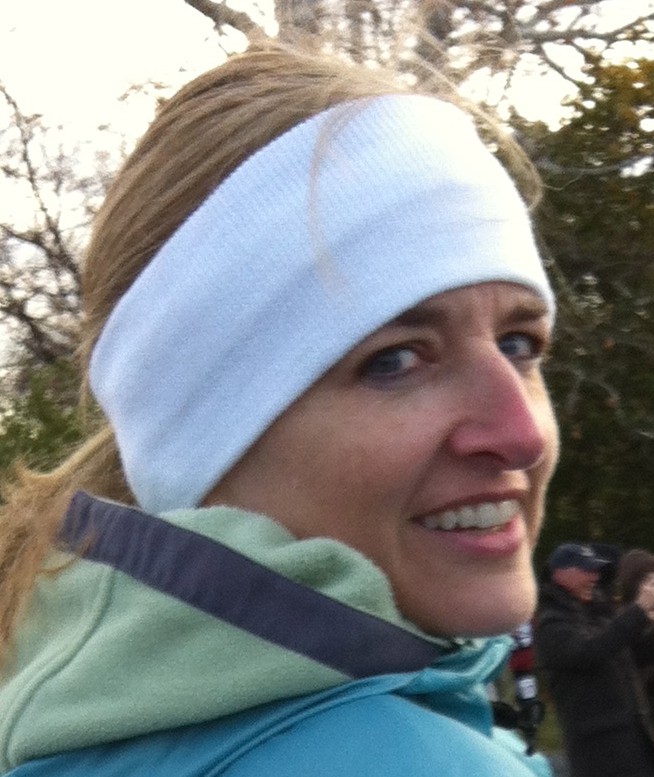
Warm ears (but not so much my Rudolph nose!)

Warm ears (but not so much my Rudolph nose!)

Another feature to consider is elastic waist vs. drawstring. Drawstrings can come untied mid-movement, which can be a pain. This time of year, clothing that is wind-resistant yet lightweight is quite welcome, too, if your exercise takes you outside of the gym. Bulky layers are too cumbersome — search for lightweight fleeces and other layers to add warmth without weight. When the weather is cold, hands and ears are often the first things to feel it. An ear-covering headband and a pair of thin but warm gloves are at the top of my list before a winter walk.

Accessories

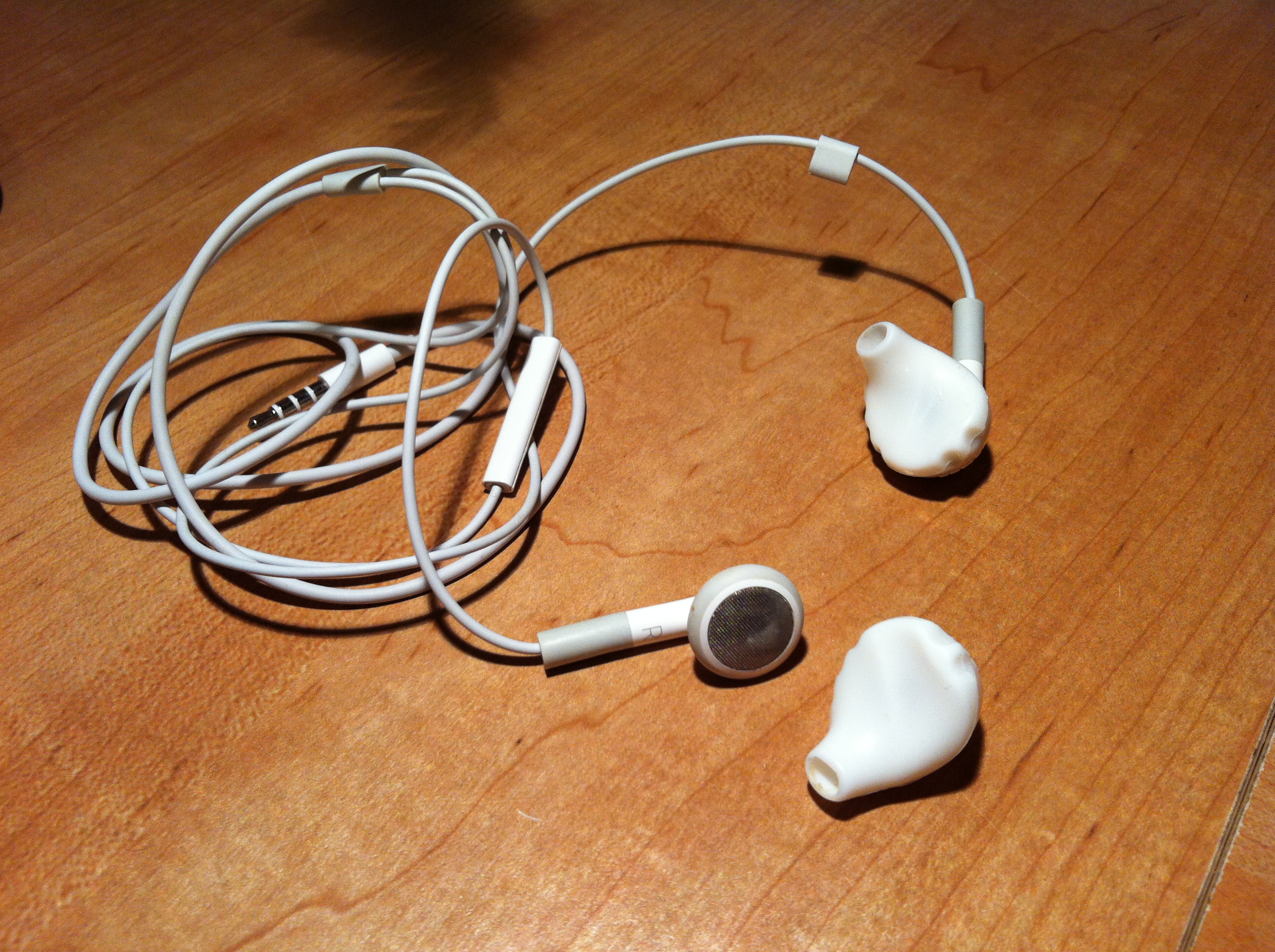
  • Pop yurbuds over your earbuds

    Pop yurbuds over your earbuds

    I’m a big fan of yurbuds. Have you ever had a problem with your MP3 player earbuds popping out of your ears when you’re doing something highly active, like jogging, briskly walking or jumping rope? Yurbuds are silicone sleeves that slip over your earbuds, and the silicone helps them stay put in your ear. It makes them less slippery. I don’t know if I just have weirdly shaped or sized ear canals, but my iPod earbuds do not stay put in my ears otherwise!

  • A while back, I switched from using my iPod to my iPhone at the gym so I could take advantage of some fitness apps. I could clip my iPod on my shirt hem but can’t do the same with my iPhone. So one of the items on my wish list last Christmas was an armband smartphone holder. I use it nearly every time I go to the gym. It’s handy and keeps my phone out of my way yet easily accessible.
  • If you don’t have clothing with pockets, or the pockets are a bit too small, a SPIbelt comes in very handy. It’s essentially an elastic band with a small, long zippered expandable pouch or two, and you wear it around your waist. It’s streamlined and lightweight but perfect for holding a phone, an ID, keys, etc. It’s great for a walk, run or bike ride.

Highlighting accomplishments

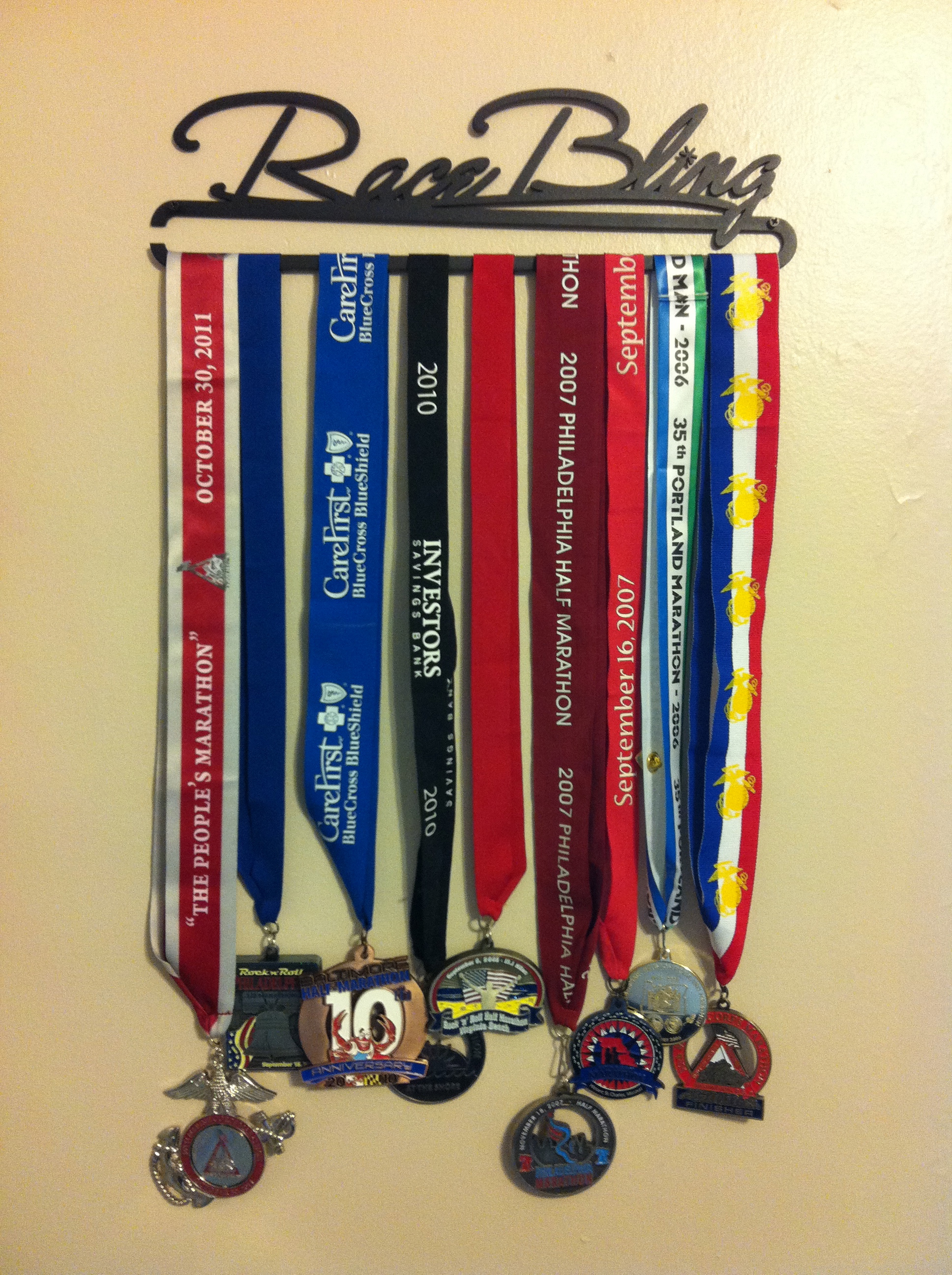
A big part of the thrill of fulfilling a fitness goal, such as completing a 5K or marathon, is showing off the rewards. Or, as most racers like to call it, race bling.

I've since added a second hanger bar to hold my -- as it says -- race bling.

I’ve since added a second hanger bar to hold my — as it says — race bling.

One can’t really walk around with medals around one’s neck more than a day or so post-race, but there are many styles of medal hangers so you can proudly display them in your home. Find a style for most anyone on your shopping list here. Options that include a race bib plus medals are here. Speaking of race bibs (i.e., the race number one pins to one’s shirt during a race), consider a scrapbook or binder to save them in. Most races provide participants with a free shirt, and there are companies that will turn those shirts into a quilt. You can find one by searching on Google.

Stocking stuffers

Lots of items can fall into this category:

  • Bumper stickers (like the 13.1 or 26.2 ovals that are popular)
  • Socks
  • Hats, whether ball cap style or sleek and stretchy
  • Ear muffs
  • Water bottles
  • RoadID tags (don’t forget safety!)
  • Exercise-related jewelry
  • Gift cards to pay for race registration fees
  • Protein bars
  • Resistance bands
  • A jump rope

In most cases, none of these items are vital to a workout session. But they can make it easier, more comfortable and more motivating. Happy shopping!

P.S. Any suggestions for items I missed? Please feel free to add in the comments!