Unknown's avatar

About Walk With Joelle

Walking coach and ACE-certified group fitness instructor

My first race (of 17 and counting)

We all have to start somewhere.

I started big — a full 26.2-mile marathon. Some people start with 5Ks and work up. Nope, not me! Ha!

And I started not with just any full marathon: My first race was the Marine Corps Marathon in Washington, D.C., with about 30,000 other willing participants and a big rumbling BOOM of a Howitzer or some such as a starting gun. Talk about race-day atmosphere!

To be fair, most of the details of my first race were decided by someone else. If it were left to me, I probably wouldn’t have become a racer at all! Or at least, I doubt it would have occurred to me. Who knew you could walk in a race?

You see, I worked at Prevention magazine. (If you’re not familiar with it, it focuses primarily on health and wellness.) In 2005, our fitness editor/director, Michele Stanten, came up with the great idea to publish a story encouraging readers to set a fitness goal of walking a half or full marathon. We printed training info in the magazine and reserved some registration spots with the race for our readers. Response was overwhelming! We had a handful of entry slots for staff members who were interested in participating, too.

Michele asked us to let her know if we wanted to sign up. (Here’s where you can refer to my previous post, Why I Race.) In short, I thought about my own health and wellness and decided to be proactive. I have to confess that there was a bit of ignorance in there too! I had no idea what I was getting myself into. But in the end, what I was getting myself into was utterly positive, rewarding and life-changing.

The MCM has a time limit that can be challenging for some walkers. It’s not about a finish time but about reaching and crossing a bridge three-quarters of the way through the course before the bridge is reopened to traffic — a.k.a. “Beat the Bridge.” Suffice it to say that it made us all be more committed to preparing properly for the event. Who wanted to train for months and months, racking up the mileage, only to be foiled on race day? It was a daunting thought. And that aspect served as a foundation for all my race training and preparation to come. Walking a race is one thing. Walking a race at a brisk pace that gets you through the course with support and across the finish line within established time limits so you can enjoy the atmosphere and the finish festivities is another.

During MCM training, we coworkers who were participating had so much to compare notes on and bond over as the months went by. I can’t imagine doing something like this for the first time all on my own, without a support system of fellow participants. It was reassuring to all of us.

The calendar ticked down and race day arrived. I could do a whole separate post on specific memories of race day (and maybe at some point I will), but I’ll share the highlights now:

  • A race-morning starting area is the biggest illustration of “hurry up and wait” that you will ever experience
  • Few things are better than seeing a familiar face cheering you on at about mile 13 or 19 when you could really use a boost
  • Walking a race is a great way to really see many neighborhoods of one city (and all in one day!)
  • Hiccup-crying for a whole mile is draining but cathartic (I beat the bridge, but wasn’t sure I would until I did!)
  • Cookies at mile 22 are the best cookies you ever ate in your life, followed closely by a celebratory bacon cheeseburger
  • Knowing you are going to cross the finish line after so many months of training and preparation is one of the most emotional things you might ever experience. It’s been nearly 9 years and it still makes me tear up even now.

Finishing a marathon is something no one can ever take away from you, and it’s an accomplishment to surely be proud of. Whether you walk it or run it or do a combo of both, everyone on the race course is entitled to give it his or her best shot and reap the emotional and physical rewards.


Why I race

OK, so it’s one thing to go for a walk. To set out around the nearby streets of your neighborhood for a 30-minute stroll.

But how and why does one progress from that to deliberately walking 13.1 (because just 13 would be crazy, as racers like to joke!) or 26.2 miles?

For me, it’s about my grandmothers.

No matter where you stand on the nature vs. nurture continuum, we all have both in our makeup to some degree. When the opportunity first presented itself to walk a marathon (more on that in a future post), my thought process turned to my grandmothers.

At that time (2005), one of my grandmothers was not in the best of health. She was 81. During her life, she wasn’t really an exerciser, and her primary form of physical activity over the years was gardening and yard work. Sometimes she did a little stationary cycling.

My other grandmother tended to amaze everyone who met her. In 2005, she was 84, and she went hiking weekly with a hiking club she helped start when she was in her 60s. Even before that, in her 50s, she took up downhill and cross-country skiing, and in her 60s she bicycled across New Jersey (from the northwestern corner to the southeastern tip) with a cycling group on a week-long trip a few years in a row. She was active and fit — and quite healthy.

So, as I thought about whether I could/should/wanted to walk a full, 26.2-mile marathon, I thought of two possible outcomes for my old age, at least in terms of the “nature” angle. And it was clear to me that I wanted to age like my amazing, inspiring active Gram — and to accomplish that, I might want to step it up (no pun intended!) while I was still relatively young.

I registered for the race. And I’ll tell you in a future post how my active Gram joined me on the race course a few years later.

Why I walk

The world is full of exercise methods — so why walking?

For me, at least, it goes back a long way. When I was in elementary school and junior high, I lived in a remote area. To get to the school bus, it was either a 3-mile drive on a winding, rutted, dirt road or a walk down the mountain we lived halfway up. My mom always said it was a quarter-mile trek. Not sure how she knew that — we didn’t exactly have a pedometer or some GPS-related smartphone app back then.

At any rate, that’s what I did: Most days during the school year from third through eighth grade, I walked down a winding path through the woods and over a small stream to get to my bus stop. And at the end of the school day, I hiked back up. It took about 15 minutes down and more than twice that up, as I recall.

Fast-forward to my 20s, when I was looking to exercise more regularly to lose weight and feel healthier. Walking became my most frequent choice, whether on the treadmill at the Y or around my neighborhood.

I think walking appealed to me at the time because it didn’t feel like a workout. For that reason, it appealed to my lazy side.

But time and knowledge have shown me that walking is not lazy at all. The beauty of walking is that pretty much anyone can do it, without choreography, without special equipment. That makes it easy, and accessible. As the saying goes: Put one foot in front of the other…

Welcome to the world of walking

Walking is a terrific form of exercise, and it also can lead you to rewarding personal achievements — did you know that you can participate in races, such as 5Ks, half marathons or full marathons, as a walker instead of a runner? Some walkers, in fact, have a faster pace than some runners!

But whether you wish to train for a race or just walk a few miles a few times a week for exercise, walking has all sorts of health benefits. It can help you lose weight, strengthen your bones, lower your blood pressure and cholesterol, lower your risk for heart attack and stroke, fend off depression and anxiety, reduce your risk for some types of cancer, improve sleep, release “feel-good” chemicals in your brain and decrease stress hormones — in other words, any walk is good for your physical and mental health!

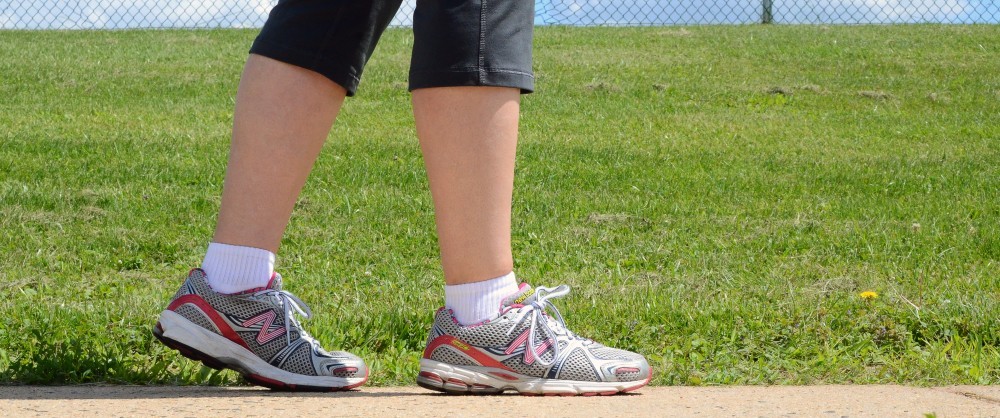
Few workouts are easier: Walking doesn’t require a gym membership or special equipment other than supportive shoes, and you can pretty much do it anywhere, anytime.

So… what are you waiting for?